Tradition: Japanese Mythology
Alternative Names: 油取り (Abura-tori)
Category: River dweller
The Myth
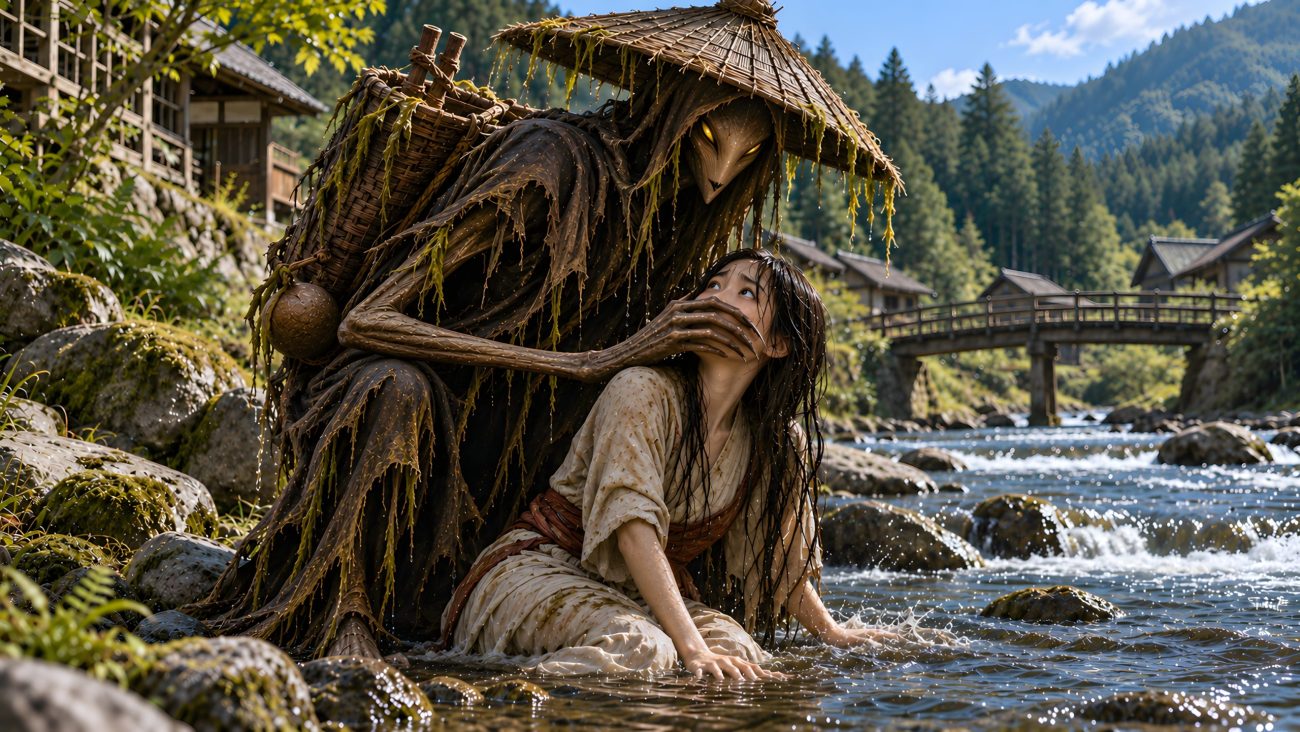
Abura-tori refers to figures in Japanese folklore said to abduct people and extract their blood or body fat for various purposes. Stories about people extracting blood or oil from humans have existed for centuries, including tales in which human blood was used to produce tie-dyed cloth. Similar stories were also passed down as folktales throughout Japan.
In the early Meiji period, rumours about Abura-tori spread throughout the Tōhoku region. Tōno Monogatari Shūi, a collection by Kunio Yanagita, records accounts from the Tōno region of Iwate Prefecture. Around the time of the Meiji Restoration, rumours circulated that Abura-tori would come to villages. Village officials sometimes issued warnings instructing women and children not to go outside after dusk.
Stories spread almost daily that a girl had been abducted while playing outside or that a child had disappeared somewhere the previous day. When the remains of a hut were discovered beside a river, and skewers used for grilling fish were found discarded nearby, people feared that Abura-tori had impaled children on the skewers to extract their oil.
Abura-tori was described as a person wearing dark blue leggings and hand coverings. It was also rumoured that its appearance heralded the outbreak of war. Similar stories circulated around the Ōtsuchi area.
Another account, recorded in Traditions of the Oguni Region of Uzen by Yoshinori Satō, describes rumours in what is now Mogami, Yamagata Prefecture, during the early Meiji period. People became suspicious of strangers and warned children to return home early in the evening. Girls were considered especially vulnerable because it was believed that their bodies yielded particularly fine oil.
Sources
Tyz-Yokai. (n.d.). Aburato. https://tyz-yokai.blog.jp/archives/1077382922.html