Tradition: Chinese Mythology
Alternative Names: 溺鬼, Shui Gui (水鬼), Luo Shui Gui (落水鬼), Shui Jin Gui (水浸鬼), Drowning Ghost, Drowned Spirit
Category: Ghost
The Myth
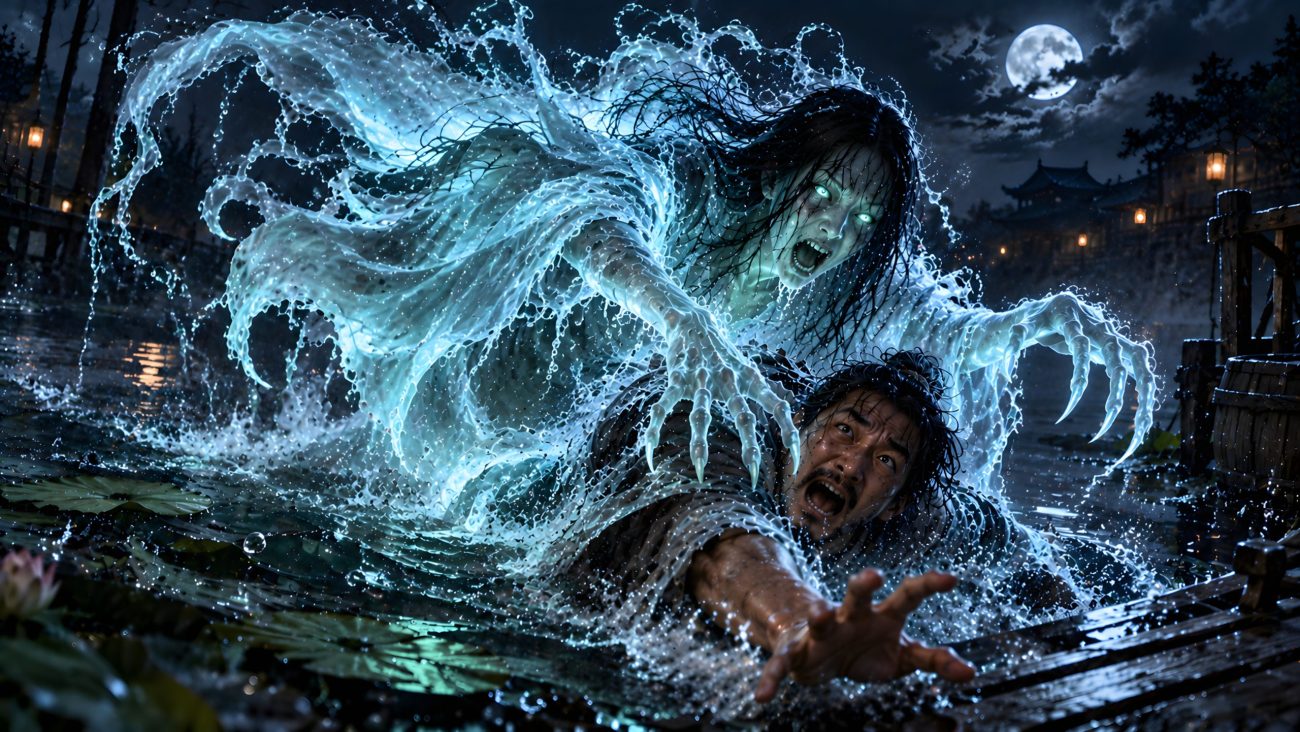
Ni Gui, or the Drowning Ghost, is the spirit of a person who died by drowning. Also known as Shui Gui or Water Ghost, it is believed to haunt rivers, lakes, and other bodies of water. Some descriptions portray it with green or red eyes and unnaturally strong, slippery skin, as though its body were coated in oil. It can swim through water as swiftly as a fish and possesses strength said to equal that of ten adult men.
The Drowning Ghost is feared for its attempts to pull living people beneath the water and drown them. According to traditional beliefs, spirits who died by drowning must find a living person to take their place before they can be reborn. This process is known as qiu ti, or seeking a replacement. The ghost may call out a person’s name from beside a river; anyone who answers risks being lured into the water and drowned. The Chinese work Beimeng Suoyan records a related belief that the spirits of the drowned tempt people along riverbanks, seeking to draw them to the same fate.
Not all tales portray the Drowning Ghost solely as a threat. In the traditional story The Fisherman and the Drowning Ghost, a fisherman bargains with the spirit, asking it to help him become wealthy. Another account in Yizhi Lu describes a drowning ghost that assists a fisherman by driving fish towards his nets. The spirit is also said in Wangwang Lu to be capable of transforming into a sheep. Nevertheless, the belief that drowned spirits seek replacements remains central to many stories about these restless dead, whose unnatural deaths prevent them from moving on to rebirth.
Sources
“溺鬼 (Nìguǐ).” Chinese Wikipedia. Wikimedia Foundation. Accessed October 16, 2026. https://zh.wikipedia.org/wiki/%E6%BA%BA%E9%AC%BC