Tradition: Romanian Mythology
Alternative Names: Sântoader
Category: Sheep
The Myth
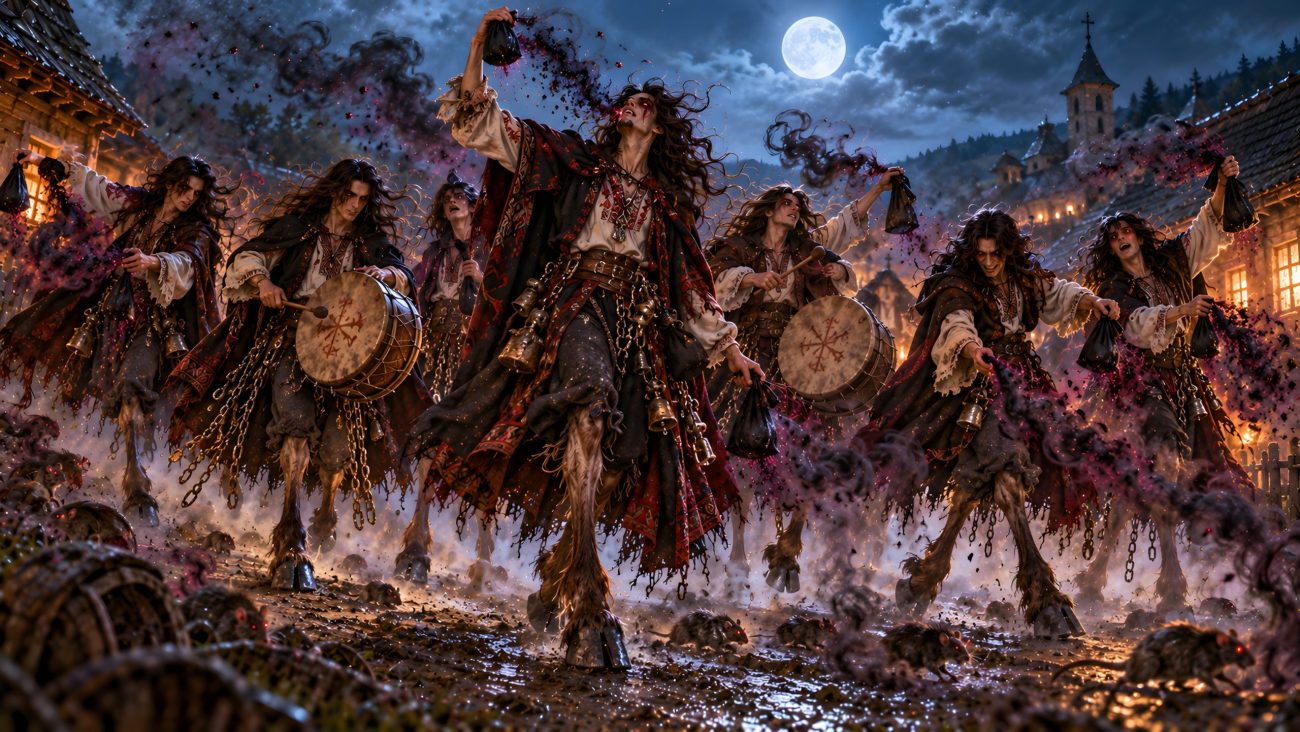
The Sântoaderi were a group of seven or nine supernatural young men, recognizable by their unusually long feet and hooves and by the capes they wore. They were said to appear mysteriously in villages as a supernatural procession, announcing their arrival with singing, drums, and the pounding of hooves. Their presence was feared because they could bring illness to those who encountered them, wrapping victims in chains that caused rheumatism or stamping upon their bodies.
When villagers heard the music and the sound of hooves approaching, they were advised to remain inside their homes, where they would be safe. Anyone who remained outside risked being seized by the Sântoaderi and carried away as part of their nocturnal procession. Those taken by the supernatural riders did not all suffer the same fate. Some eventually returned healthy and carrying gifts, while others came back sick, dying, or insane.
The Sântoaderi were also associated with the zîne, Romanian fairy-like beings who likewise traveled through the night in dancing processions. According to the folklore, twenty-four days after Easter the zîne and Sântoaderi could meet together to play, and people offered them bouquets of flowers. Their name comes from a regional name for Saint Theodore, whose feast day was considered a particularly likely time for the Sântoaderi to appear.
Sources
“Sântoaderi.” Wikipedia: The Free Encyclopedia. Wikimedia Foundation. Accessed October 5, 2026.
https://en.wikipedia.org/wiki/S%C3%A2ntoaderi