Sarutsura Kozō

Tradition: Japanese Mythology
Alternative Names: Sarutsura Kozo, さるつら小僧, Monkey-Faced Boy
Category: Monkey


The Myth

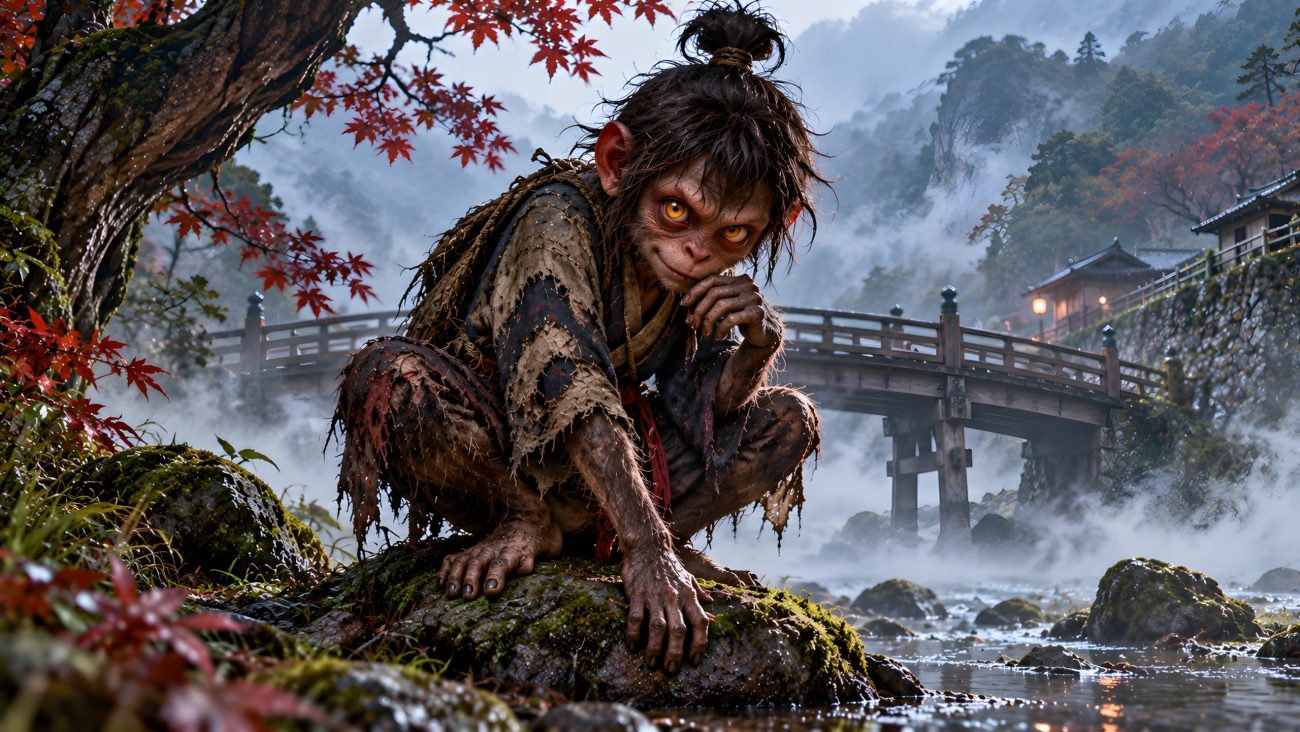
Sarutsura Kozō is a mysterious yokai depicted in a type of supernatural creature card game produced during Japan’s Edo period. As its name suggests, it takes the form of a young boy with a monkey-like face. Its image appeared on a picture card accompanied by the phrase “Sarutsura Kozō of Saruhashi,” linking the creature to a place called Saruhashi.

The name Saruhashi probably refers to the bridge of that name spanning the Katsura River, also known as the Sagami River. However, it is uncertain whether Sarutsura Kozō was ever the subject of an actual local legend. The creature is primarily known through its depiction on the old yokai card, which later inspired the manga artist Shigeru Mizuki to create an illustration of another yokai called Kawazaru, or River Monkey.


Sources

“Kozou.” 新版TYZ 妖怪図鑑 (New TYZ Yokai Encyclopedia). https://tyz-yokai.blog.jp/archives/1049652018.html


Funakoshi-mura no Kikai

Tradition: Japanese Mythology
Alternative Names: 船越村の奇怪, The Strange Incident of Funakoshi Village
Category: Monkey


The Myth

In June 1716, a farmer named Sagouemon lived with his wife and three children in Funakoshi Village, in Musashi Province. Night after night, strange lights appeared outside their home, accompanied by a terrifying presence that caused their youngest daughter, a two-year-old girl, to scream in fear. Whenever the light from outside approached the house, another glowing light emerged from the inner rooms and confronted it near the window. While the two lights clashed, the child would stop crying, and the disturbance would end. Despite prayers, purification rituals, and attempts to discover the cause, the family could not rid themselves of the phenomenon.

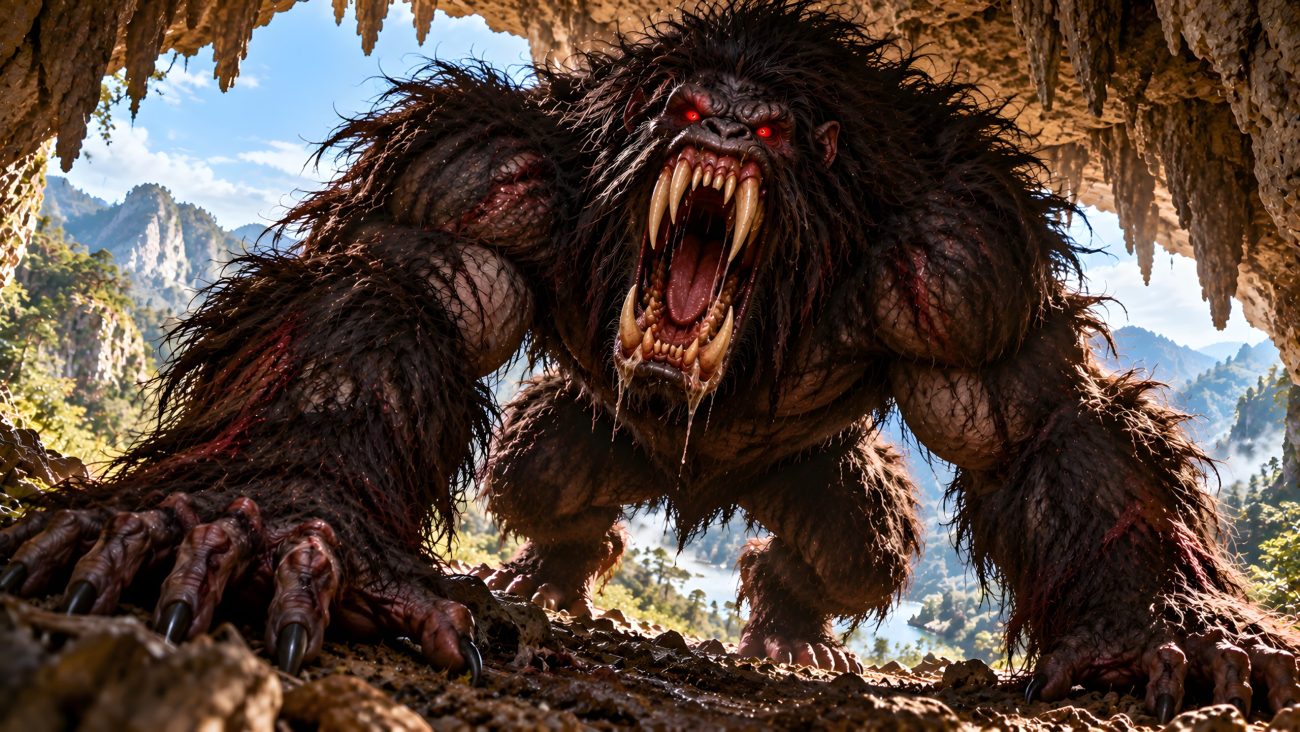
During a thorough cleaning of the house, Sagouemon’s wife discovered an old, soot-blackened paper talisman stuck to a wall in the inner room. Without recognizing its significance, she discarded it with the rubbish. That night, the outside light returned, smashed through the bamboo lattice, and entered the house. The protective light did not appear. The creature seized the little girl and tried to carry her away, but Sagouemon struck it with a sickle. Although he felt the blow land, the creature escaped with the child. The following morning, villagers followed a trail of blood from the house into the nearby hills, where they discovered a large, ape-like beast hiding in a small cave. They beat it to death, discovering that it was an aged monkey on the verge of becoming a hihi, a fearsome Japanese ape-like monster. The missing girl was never found.

When the village officials investigated, they also asked about the second light, which had ceased appearing after the talisman was discarded. The family and villagers searched the drainage ditch where the rubbish had been thrown and recovered an old, blackened Kumano Gohō talisman, a sacred protective charm revered by Sagouemon’s ancestors. They came to believe that the talisman had housed a divine presence that had protected the family by opposing the beast. From then on, the villagers treated the charm with great reverence, and the mysterious disturbances never returned.


Sources

“Funakoshi Monkey.” 新版TYZ 妖怪図鑑 (New TYZ Yokai Encyclopedia). https://tyz-yokai.blog.jp/archives/1046235949.html
Shojo

Tradition / Region: Chinese Mythology, Japanese Mythology
Alternate Names: Kaishojō
Category: Monkey


The Myth

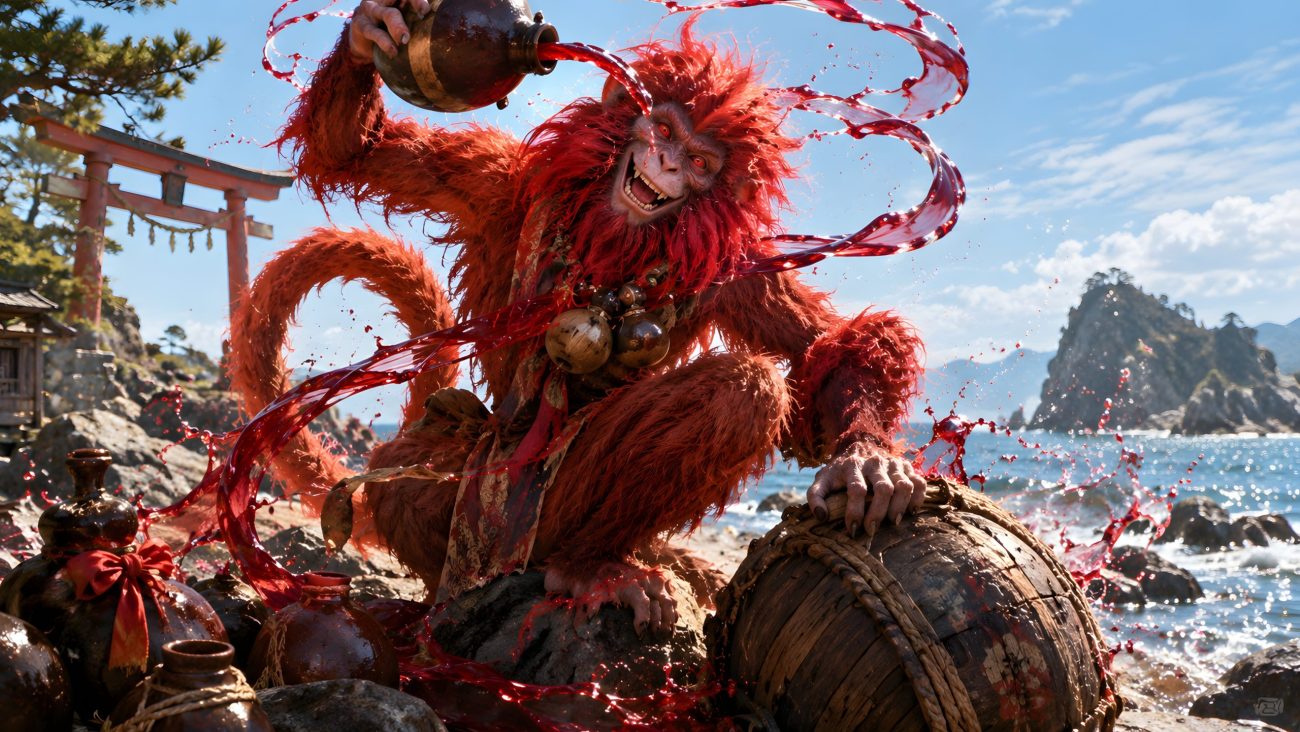
The Shōjō is a red-haired, human-speaking creature originating in Chinese mythology that became well known throughout Japan, appearing in regional legends, folktales, and traditional performances. It is strongly associated with alcohol and is said to possess vividly red blood, which supposedly gives its name to *shōjōhi*, a brilliant scarlet dye used for woollen fabrics. In Japanese legends, the Shōjō is often connected to the sea. In Shiwa District, Iwate Prefecture, a story tells of Shōjō emerging from the water to drink wine from a barrel buried on the beach, becoming so drunk that it falls inside. In Muro District, Wakayama Prefecture, a female Shōjō living in the sea is enchanted by a young man’s flute playing and gives him a hairpin made from her own hair. Used as fishing equipment, it allows him to catch whichever fish he desires without bait. Another tale from Nishitonda Village describes a hut where a sake barrel was placed to capture Shōjō. As expected, a creature emerged from the sea, drank until intoxicated, and was caught. Some regions also tell of the *Umi-Shōjō*, or Sea Shōjō, a supernatural being combining characteristics of the Shōjō and the ghostly ship-haunting spirits known as funayūrei. The Shōjō also appears in traditional *Kirin Shishi* lion dances performed in Tottori and Hyōgo prefectures, where it acts as a guide leading the mythical Kirin. Its vivid red colouring was also associated with smallpox, and papier-mâché Shōjō figures and masks were sometimes used as protective charms to ward off disease and misfortune.


Sources

“Shōjō.” 新版TYZ 妖怪図鑑 (New TYZ Yokai Encyclopedia). https://tyz-yokai.blog.jp/archives/1010654279.html