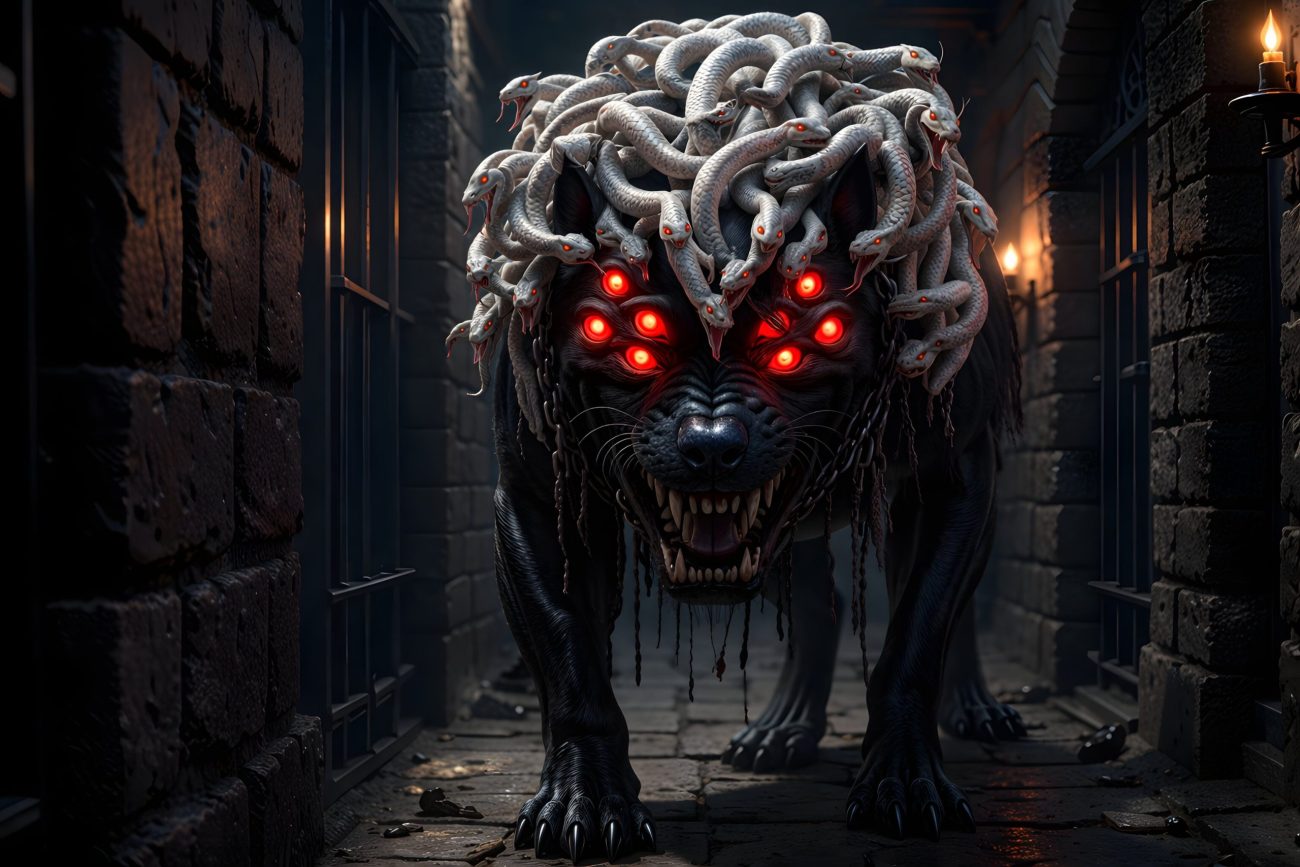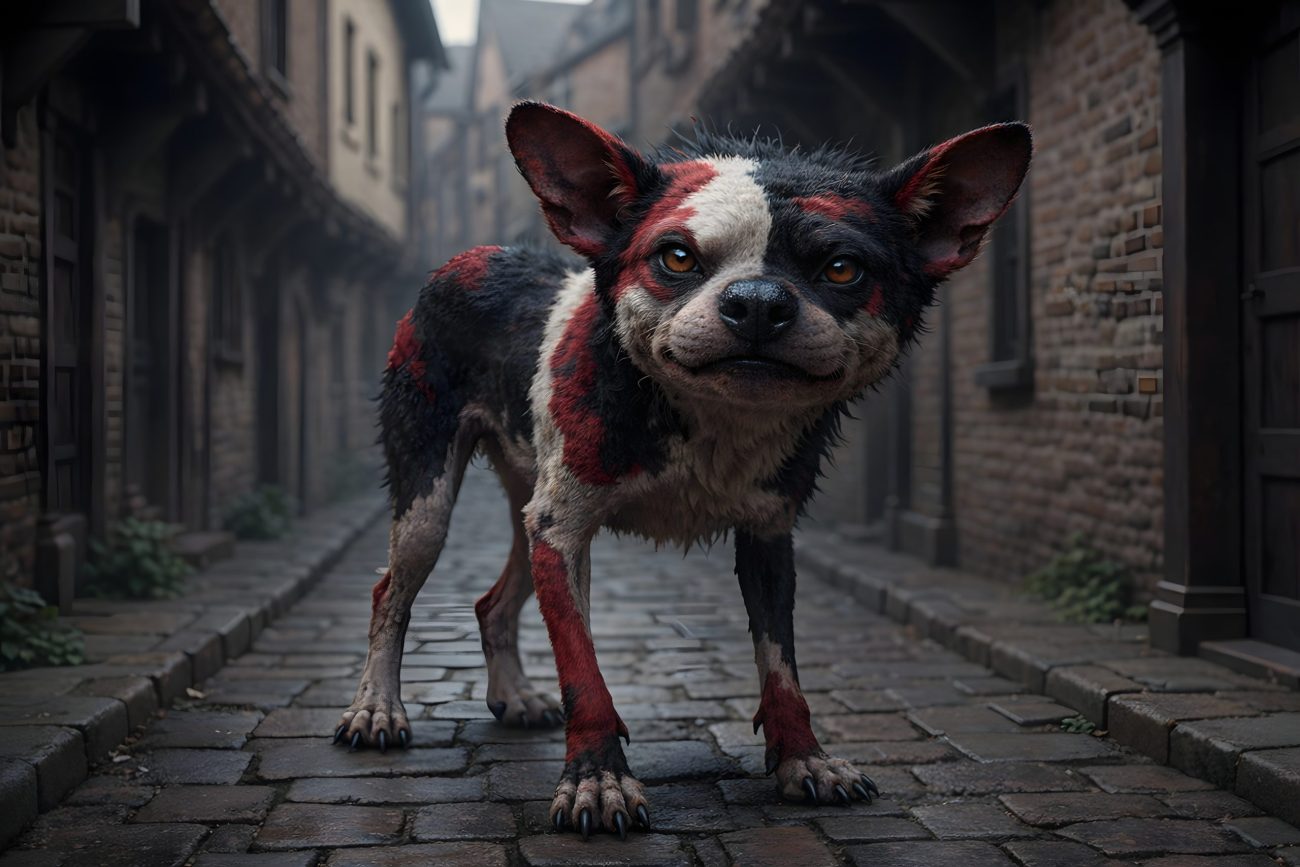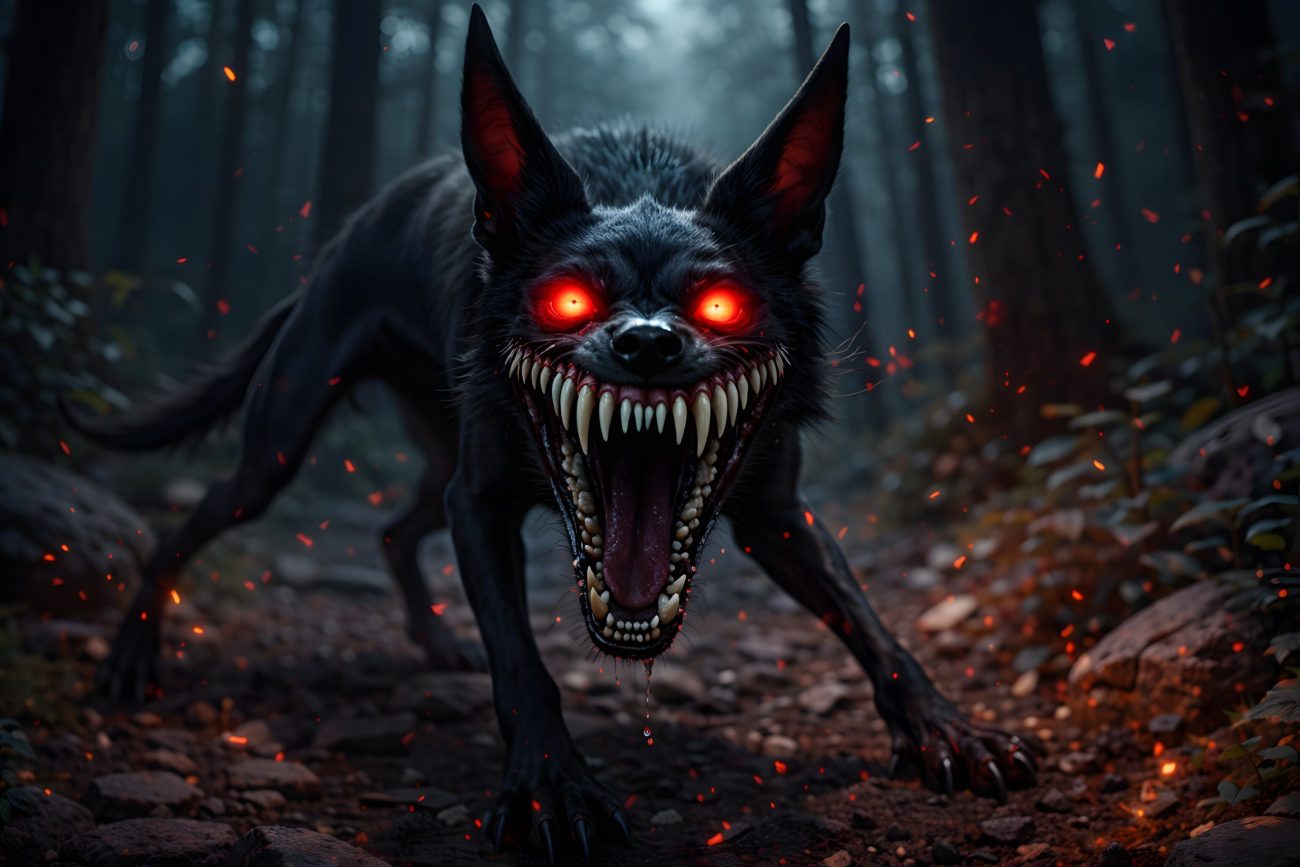
Gytrash

Tradition / Region: English Mythology
Alternate Names: Guytrash, Guytresh
Category: Dog, Shapeshifter


The Myth

The Gytrash is a feared spirit of northern England, especially in the West Riding of Yorkshire. It is known as a wandering shape-changer that haunts lonely roads, crossroads, and empty country paths where travelers pass after dark.

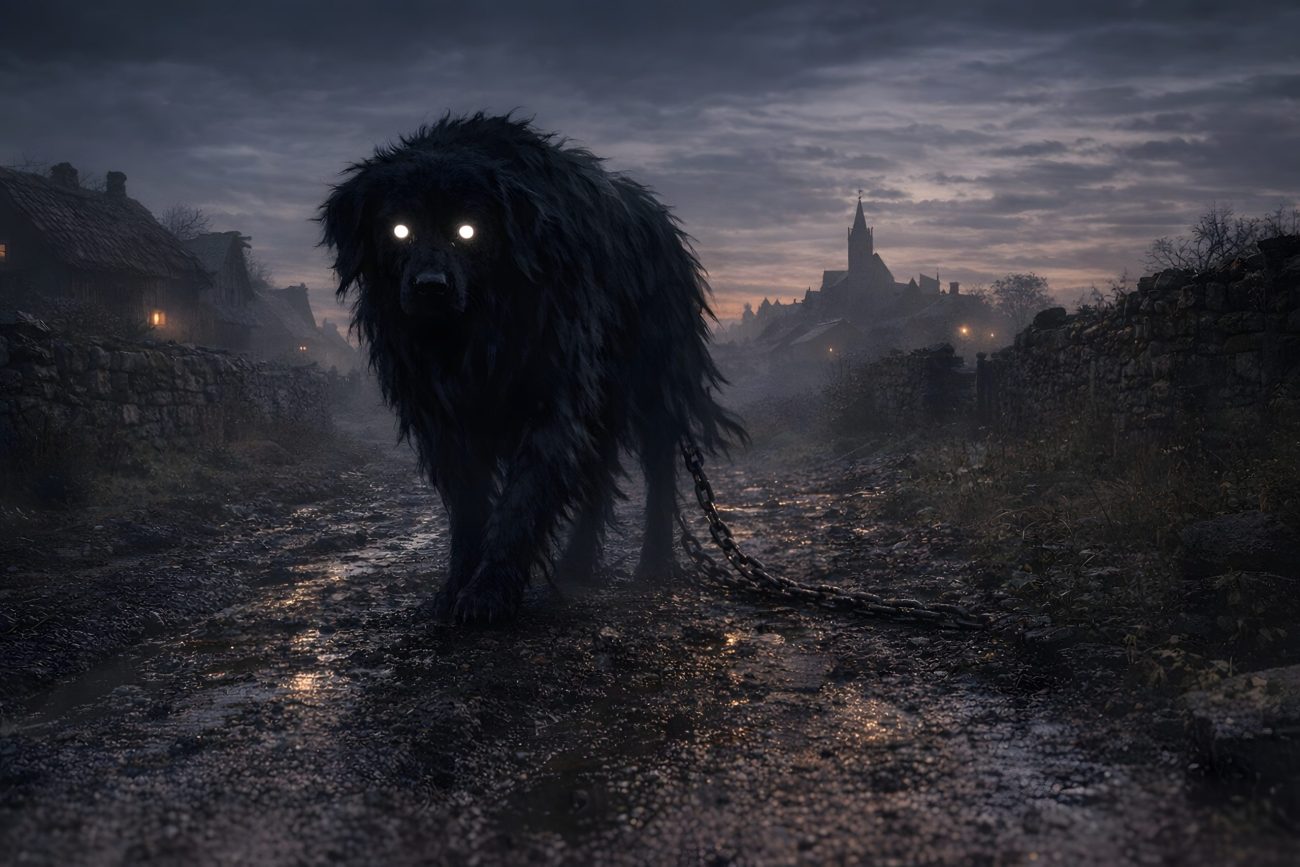
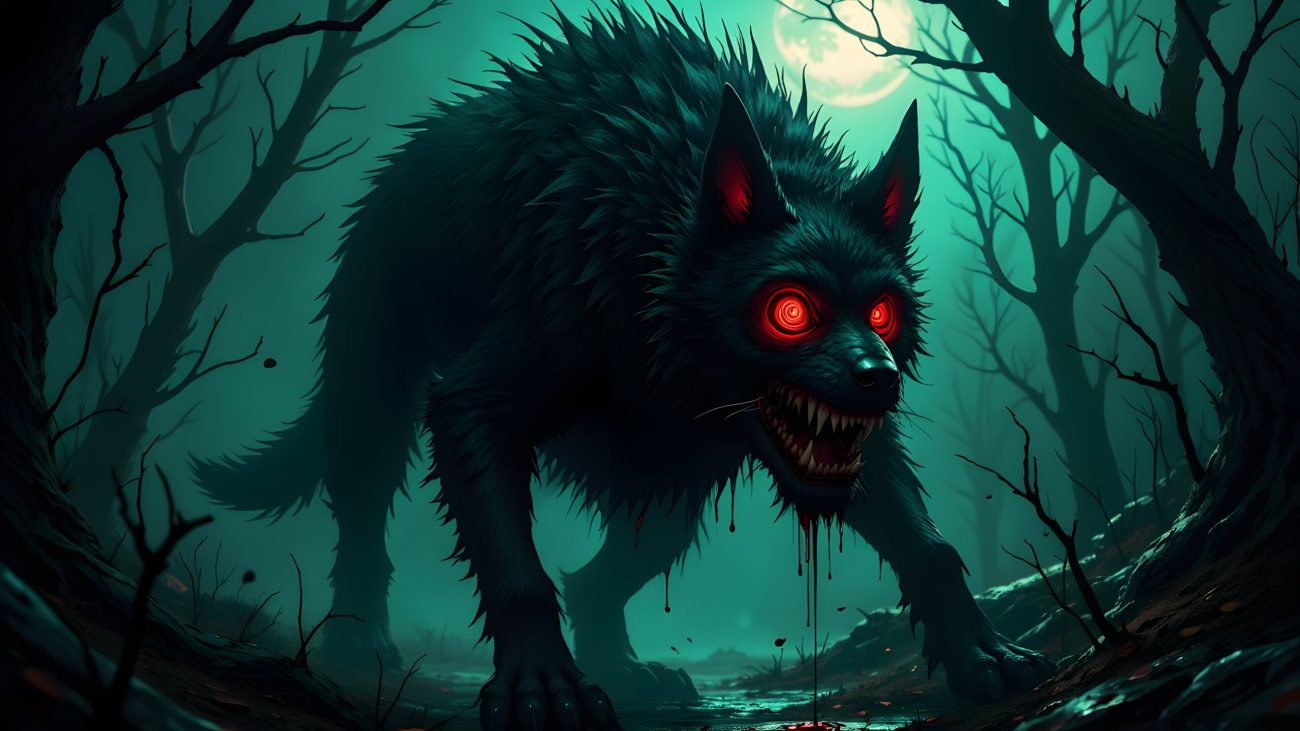
The Gytrash rarely keeps one form. It most often appears as an animal — commonly a horse, mule, calf, or large dog. When it takes the form of a dog, it is usually described as huge, shaggy, and unnatural, with strange eyes that glow in the dusk. Sometimes it drags chains or moves silently beside the road, watching those who pass.

Travelers who meet the Gytrash do not always meet the same fate. In many tales it is dangerous, leading wanderers astray into marshes, forests, or darkness from which they may never return. Its appearance is often taken as a bad omen, a sign of misfortune or death.

Yet in other stories the spirit is not wholly malevolent. Some say the Gytrash may guide a lost traveler back onto the proper road, escorting them silently through the night until safety is reached before vanishing again.

The spirit became widely known through the stories of the Brontë family. In one famous account, a lone traveler walking at dusk sees what she believes to be a Gytrash: first a spectral horse approaching, then a huge black-and-white dog gliding along the hedge, its presence filling the road with unease.

The Gytrash is remembered as a restless being of the night — neither ghost nor demon nor fairy, but a wandering spirit that moves between shapes, appearing where the road is empty and the darkness is deep.


Sources

Wikipedia contributors. (n.d.). Gytrash. In Wikipedia, from https://en.wikipedia.org/wiki/Gytrash
Black Shuck

Tradition / Region: English Mythology
Alternate Names: Old Shuck, Shock
Category: Dog


The Myth

Black Shuck is one of the most famous spectral dogs in English tradition, particularly in East Anglia. He is described as a huge black dog, often shaggy, sometimes with blazing eyes, and is generally considered a sign of death or disaster.

Legends claim that Black Shuck haunts lonely roads, churchyards, and coastal paths. Some stories portray him as merely terrifying, while others say he can kill those who encounter him, or foretell the death of someone close to them.

One of the most famous accounts dates to 1577, when the creature was said to have burst into the church at Bungay during a violent storm, killing two worshippers. On the same day, it reportedly appeared at Blythburgh church, killing three more people and leaving scorch marks and claw scratches that locals later claimed were still visible.

In some places, such as Shuck’s Lane in Overstrand, the dog is said to appear frequently. Witnesses sometimes report the smell of brimstone or burned ground where it has passed.

Although usually feared, a few traditions describe a gentler version of Black Shuck who silently accompanies travelers home at night as a guardian spirit rather than a death omen.

The name Shuck likely comes from an old regional word meaning “shaggy”, reflecting the creature’s wild, rough-coated appearance.


Sources

Wikipedia contributors. (n.d.). Black Shuck. In Wikipedia, from https://en.wikipedia.org/wiki/Black_Shuck


Gabriel Hounds

Tradition / Region: English Mythology
Alternate Names: Gabriel Ratchets, Gabble Retchets, Sky Yelpers
Category: Dog, Ghost, Death omen


The Myth

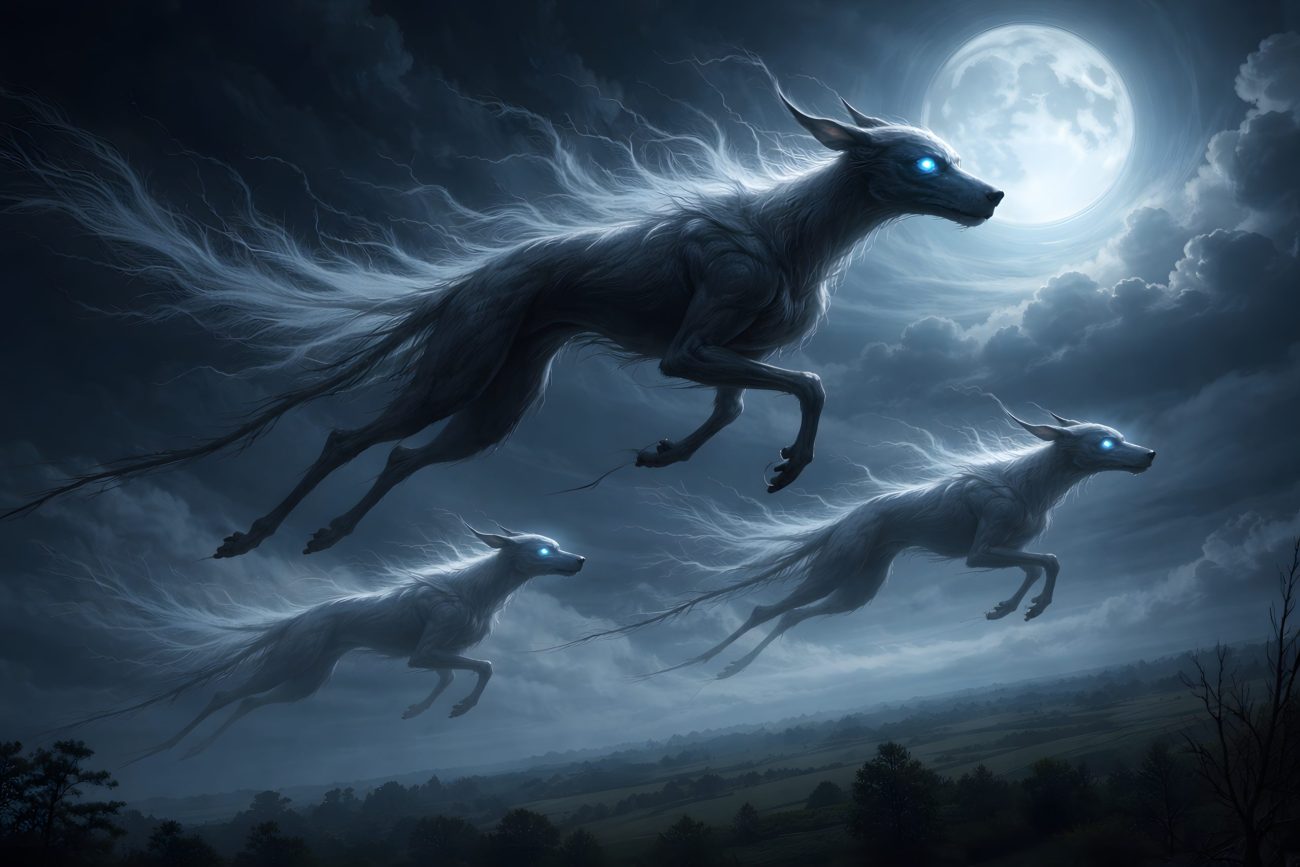
The Gabriel Hounds are said to be ghostly dogs that travel across the night sky.

They are rarely seen, but their cries are often heard — high, distant, and mournful, echoing above the land in darkness. Some describe them as dogs with human heads, flying through the air like a spectral hunt. When they pass over a house, it is said to foretell death or misfortune for those who live there.

In some traditions, the hounds are believed to be the restless souls of unbaptised children, wandering between worlds and crying through the night. In others, they belong to a supernatural hunt led by a figure named Gabriel, who is doomed to roam the skies with his dogs as punishment for having hunted on a holy day.

Their voices were sometimes explained by the sound of geese flying overhead at night, whose honking could resemble distant barking. Yet for many, the cries were not natural at all, but a warning from the unseen world.

Thus the Gabriel Hounds were remembered as sky-roaming ghost dogs — heard more often than seen, and feared wherever their eerie yelping was taken as a sign that death was near.


Sources

Wikipedia contributors. (n.d.). Black dog (folklore). In Wikipedia, from https://en.wikipedia.org/wiki/Black_dog_(folklore)


Dando’s Dogs

Tradition / Region: English Mythology
Alternate Names: Devil’s Dandy Dogs
Category: Dog, Ghost


The Myth

In English tradition there is a tale of Dando, a priest who loved hunting more than he loved the duties of his church.

One Sunday, after spending the day hunting instead of attending to sacred matters, he sat with his companions drinking. They gave him ale and wine, but he demanded more and more. At last he swore that if the drink he wanted could not be found on Earth, then it must be fetched from Hell itself.

At that moment a strange huntsman appeared among them. He offered Dando a flask and gave him drink, but then seized part of the priest’s game. Dando, drunk and furious, shouted that he would follow the huntsman even to Hell to recover it.

No sooner had he spoken than the huntsman carried him away, vanishing with him in an instant. Dando’s hounds gave chase, racing after their master, but they could not catch him.

From that time on, people said that Dando was lost, taken into the otherworld by the mysterious hunter. Yet his dogs never stopped searching. On certain mornings, especially early on Sundays, their howling is said to be heard in the distance, still hunting or still seeking their vanished master.

Thus Dando’s Dogs were remembered as ghostly hounds of the Wild Hunt — forever running across the unseen fields, chasing what they can never reach and echoing through the air as a warning against sin and excess.


Sources

Wikipedia contributors. (n.d.). Dando’s dogs. In Wikipedia, from https://en.wikipedia.org/wiki/Dando%27s_dogs


Black Dog of Newgate

Tradition / Region: English Mythology
Alternate Names:
Category: Dog, Ghost


The Myth

At the old Newgate Prison in London, there was once said to haunt a terrible creature known as the Black Dog of Newgate.

The story tells that during a time of famine, when hunger and misery gripped the land, a scholar was imprisoned there. He had a reputation as a sorcerer, a man said to have practiced dark arts. The prison conditions were so dreadful that the inmates, driven mad with starvation, killed and ate him.

Not long after this deed, something began to move through the prison in the night.

Prisoners reported seeing a monstrous black dog pacing the corridors and the cells. It appeared suddenly and vanished just as quickly, but its presence filled the place with dread. Those who had taken part in the killing believed the creature was the spirit of the murdered man, returned in a new form to avenge himself.

One by one, the prisoners who had been involved were said to die horribly, as though hunted down by the spectral beast. Fear spread through the prison until the survivors, half-mad with terror, broke out and fled.

But the story says the black dog did not stop there. It followed the escapees wherever they tried to hide, pursuing them until each had paid for the crime.

The tale was later told as a warning about cruelty, sin, and the brutal life within the prison walls. Some even doubted whether the beast was real at all, claiming the only “black dog” in the prison was a dark stone in the dungeon where condemned prisoners sometimes dashed out their brains in despair.

Yet the legend endured, and the image remained of a great black hound stalking the halls of Newgate — a spirit born from murder, hunger, and guilt, returning to claim the lives of those who had done wrong.


Sources

Wikipedia contributors. (n.d.). The Black Dog of Newgate. In Wikipedia, from https://en.wikipedia.org/wiki/The_Black_Dog_of_Newgate


Getulian Dog

Tradition / Region: English Mythology
Alternate Names: Canis getulus, Canis lucernarius, Mimic Dog
Category: Dog


The Myth

In early accounts of strange animals recorded by scholars and writers, there are descriptions of a mysterious creature known as the Getulian Dog.

It was said to be a four-legged beast of unusual appearance. Some described it as red and black, or white and black, with a broad, frog-like head and large protruding ears. Others gave it a sharper, darker face, with long legs, shaggy hair, and a short, curved body. Though dog-shaped, it seemed unlike any known breed.

What made the creature most remarkable was not its appearance but its behavior. The Getulian Dog was believed to possess an uncanny intelligence and the ability to imitate human actions. It could copy gestures and movements, and some stories claimed it could even serve people, performing tasks much like a servant.

In certain accounts, the animal was said to be capable of appearing in performances or plays, behaving in ways so human-like that observers were astonished. Because of this strange ability, it was sometimes called the Mimic Dog.

Whether the creature truly existed or belonged to the realm of marvels, it lived on in the writings of naturalists and storytellers alike, remembered as a curious and almost human dog whose nature blurred the line between beast and person.


Sources

Cryptid Archives contributors. (n.d.). Mimick dog. In cryptidarchives.fandom.com, from https://cryptidarchives.fandom.com/wiki/Mimick_dog


Freybug

Tradition / Region: English Mythology
Alternate Names: Fray-bug, Fraybug
Category: Dog


The Myth

In the folklore of Norfolk in England, people spoke of a terrifying creature known as the Freybug.

It was said to be a monstrous black dog, as large as a calf, wandering lonely country roads and appearing suddenly before travelers. Those who encountered it were struck with fear, for it belonged to the same shadowy kind as the other great black hounds of England that haunted paths, fields, and crossroads.

The creature did not need to attack to bring terror. Its size, darkness, and silent approach were enough to unnerve anyone who saw it on the road at night. Many believed that to meet such a beast was a sign of danger, misfortune, or a presence from the unseen world.

The name of the Freybug was remembered in old writings as a word for something meant to frighten — a specter or bogey used to terrify the living. In time, this fearful name came to be linked with the image of the black roadside hound itself.

So the Freybug lived on in memory as one of the dread black dogs of England, a creature of the night that prowled the roads of Norfolk and left travelers hurrying home in fear.


Sources

Wikipedia contributors. (n.d.). Freybug. In Wikipedia, from https://en.wikipedia.org/wiki/Freybug