Tradition: Mexican Mythology
Alternative Names: Chanekeh, Ohuican Chaneque
Category: Goblin
The Myth
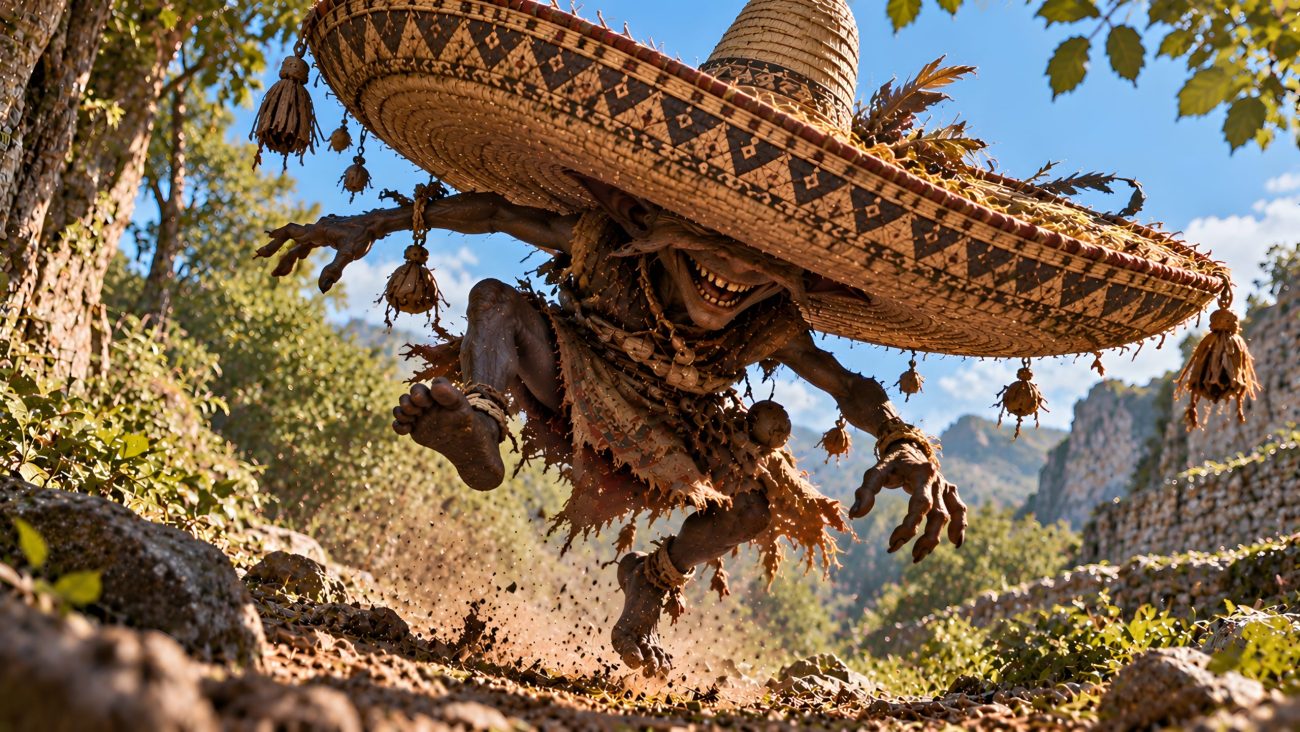
Chaneques are small, sprite-like supernatural beings associated with forests, rivers, caves, and other places connected to the natural world. They are usually described as short in stature and often naked. Some accounts portray them as childlike figures with the faces of elderly men or women, while others describe a little black man who hops and jumps, sometimes wearing a wide-brimmed sombrero. Their appearance varies between regions and traditions. Children are said to see them more easily than adults, and they may reveal their presence through singing, screaming, or crying.
The Chaneques are closely connected to the earth and water and are regarded in many traditions as guardians of nature. They can communicate with jungle animals and protect the places they inhabit. Some are believed to watch over crops, guard homes against intruders, and prevent evil beings from entering. In exchange for their protection, villagers traditionally left them offerings. Travellers entering the forest could also wear their clothing inside out as a means of protection against these spirits.
Despite their protective role, Chaneques are unpredictable and can become mischievous or hostile. They enjoy leading people astray, sometimes causing victims to wander for several days and suffer memory lapses. Some legends explain these experiences by claiming that the Chaneques carry their victims into the underworld, Mictlán or Chiconauhmictlán. The entrance to this realm is sometimes located inside a dried kapok tree. Other accounts describe Chaneques frightening intruders so severely that their souls leave their bodies. Without a special ritual to reunite the soul with its body, the victim may fall ill and die.
Chaneques can also inflict physical harm. In some stories, they bruise people, provoke terror, or play cruel tricks on those who anger them. They have also been associated with sexual encounters and the abduction of young men and women. A historical document from 1676 records a young man’s account of sexual experiences with a female duende, a term sometimes used for beings comparable to Chaneques. These accounts reflect the varied and sometimes troubling roles attributed to the spirits in Mexican folklore.
The character of the Chaneques differs considerably across local traditions. Some are helpful guardians, while others are troublesome or dangerous beings that delight in frightening humans and disrupting their lives. Historical accounts influenced by Christianity sometimes portrayed them as demons associated with the Devil. In a colonial-era tale by Artemio de Valle-Arizpe, a Chaneque torments a woman named Doña Luisa, inflicting bruises and causing fear. Such stories illustrate how older beliefs about nature spirits became intertwined with Christian interpretations of supernatural beings.
Known by names such as Chanekeh and Ohuican Chaneque, these beings form part of a broader tradition of small supernatural figures found throughout Mexico and Mesoamerica. Their association with forests, water, crops, and household protection reflects a belief that the natural world is inhabited by unseen beings that may help or harm those who encounter them. Respect, offerings, and protective customs were ways of maintaining a cautious relationship with these unpredictable spirits.
Sources
“Chaneque.” Wikipedia: The Free Encyclopedia. Wikimedia Foundation. Accessed October 17, 2026. https://en.wikipedia.org/wiki/Chaneque