Tradition: Icelandic Mythology
Alternative Names: Gryla, Grýlu
Category: Giant
The Myth
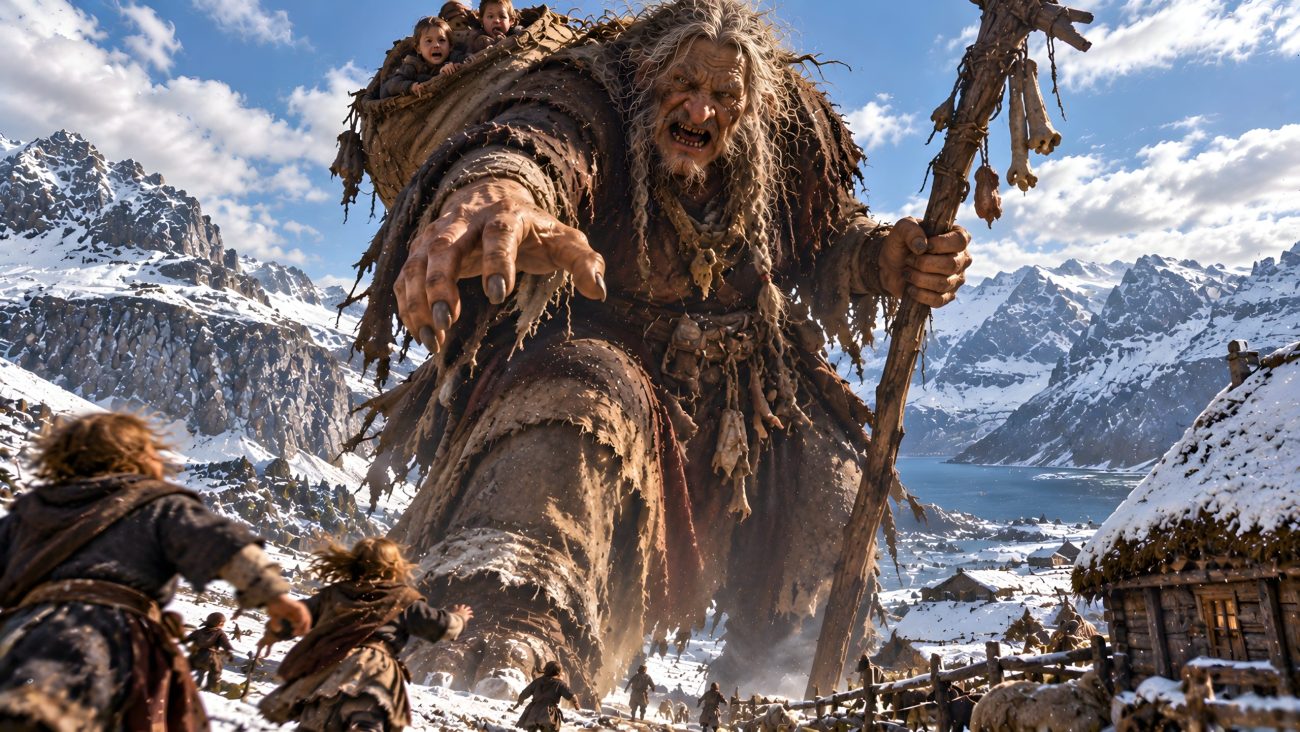
Grýla is a monstrous being in Icelandic folklore who dwells in the wilderness and is traditionally portrayed as a hideous, greedy, troll-like crone. Her name appears in medieval Icelandic sources, including the Prose Edda, where she is listed among the names used for troll-women. A manuscript from the early fourteenth century also contains a list of expressions associated with Grýla that refer to foxes, suggesting a possible connection with the Arctic fox. The earliest clear references identifying Grýla as female and associating her with Christmas, however, date only from the seventeenth century.
In seventeenth-century poems, Grýla wanders between farms and human settlements, demanding charity from the people she encounters. Her requests often involve naughty children, reflecting her frightening reputation as a monster associated with the threat of child-eating. One poem even describes her wandering between farms during summer rather than at Christmas and portrays her as a hermaphrodite, illustrating how varied her early representations could be.
Grýla’s origins and original nature remain uncertain. Related figures appear in the folklore of Iceland and the Faroe Islands, and some have been connected with traditions involving disguises and masked performers. These parallels have led to the suggestion that Grýla may once have been associated with similar seasonal customs in Iceland. Early traditions do not consistently identify her as female, and she may originally have been imagined as a male monster rather than an ogress.
In modern Icelandic Christmas folklore, Grýla is best known as the mother of the Yule Lads, or jólasveinar. Her monstrous appearance and appetite for children remain part of her traditional image, although these frightening characteristics are often softened in depictions intended for younger audiences.
Sources
“Grýla.” Wikipedia: The Free Encyclopedia. Wikimedia Foundation. Accessed October 16, 2026. https://en.wikipedia.org/wiki/Gr%C3%BDla