Tradition: Indian Mythology
Alternative Names: Pishacha, Piśāca, Paiśāci
Category: Demon
The Myth
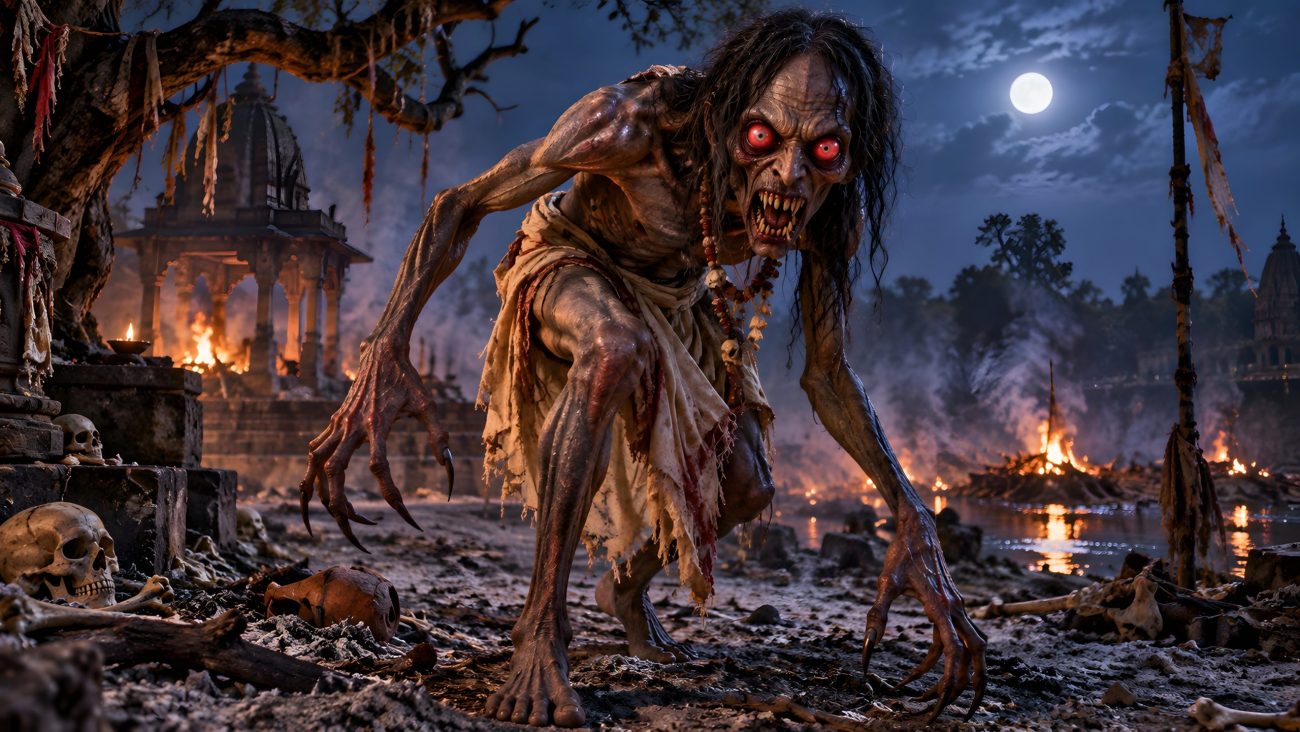
Pishachas are malevolent, flesh-eating demons or vampire-like beings. They are described as having bulging veins and protruding red eyes and are said to possess their own languages, known as Paiśāci. They favor darkness and are traditionally associated with cremation grounds, where they haunt the dead alongside bhūtas and vetālas.
According to the Mahabharata, the original Pishachas were creations of Brahma. The epic gives several accounts of their associations: they are said to reside in the courts of Kubera or Brahma and to worship Shiva and Parvati. They fought alongside Ghatotkacha against Karna, while another account describes them serving the Kauravas as the horses of Alambusha’s chariot.
Other traditions make the Pishachas descendants of Krodha, the personification of anger, or of Daksha’s daughter named Pishacha. Another account makes them the sons of Kashyapa and Krodhavasa, one of Daksha’s daughters. The Nilamata Purana also describes the Kashmir valley as having been inhabited by the Nagas and Pishachas.
Pishachas can shapeshift and assume any form, as well as become invisible. They feed upon human energy and can enter and possess human beings, altering their thoughts and causing insanity, illnesses, and other abnormalities. Mantras are traditionally used to drive a possessing Pishacha from its victim, while offerings made during religious ceremonies and festivals are intended to keep them away.
A person who is not properly buried may also become a Pishacha. In this form, the dead person remains trapped within the corpse for an indefinite period. The transformed spirit loses its ability to eat and drink, becomes blind, and suffers greatly, yet retains an instinctive craving for the living. It can sense their presence and smell and may attack them.
Sources
“Piśāca.” Wikipedia: The Free Encyclopedia. Wikimedia Foundation. Accessed September 12, 2026. https://en.wikipedia.org/wiki/Pishacha