Tradition: Mari Mythology, Russian Mythology
Alternative Names: Idym oza
Category: House dweller
The Myth
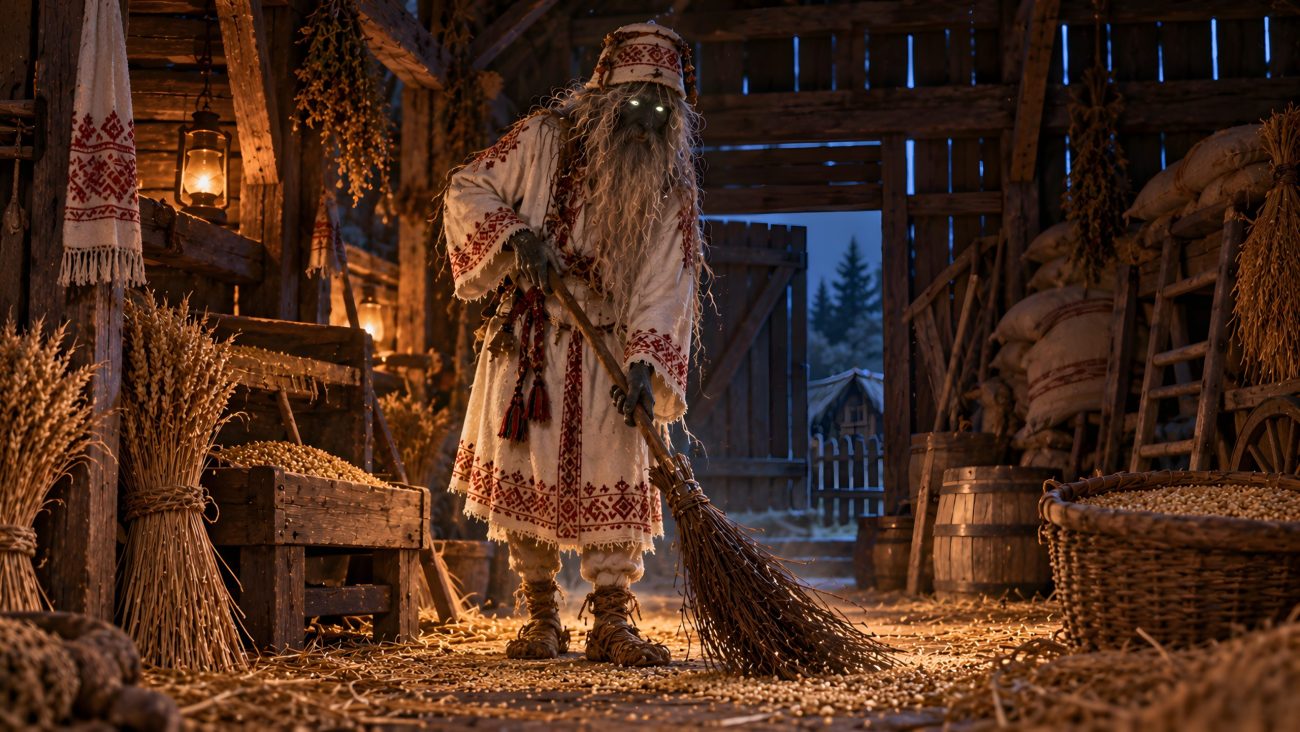
The Idym Oza is the guardian spirit of the threshing floor and barn in Mari folklore. It is usually invisible, but may appear as a man dressed in traditional white Mari clothing or, in some accounts, as a black figure. The spirit watches over barns where grain and bread are dried, threshed, and stored, ensuring that everything remains in order.
The Idym Oza is said to appear around midnight, carrying a broom as it walks through the barn and inspects the premises. It checks that the work area is tidy and that the stored grain is properly cared for before disappearing. People who encounter the spirit should not disturb it or interfere with its duties. In traditional accounts, it is important to ask the barn guardian’s permission before spending the night in the barn. Those who forget may be frightened by strange noises, footsteps, or other disturbances, and the spirit may prevent them from sleeping.
The Idym Oza was treated with respect, particularly during the harvest season. At the beginning of threshing, families performed sacrificial rites to honour the barn’s guardian and secure a successful harvest. A priest might bring porridge to the barn and recite prayers asking the spirit to preserve the grain, assist with threshing, and protect the flax and hemp. The barn owner was also expected to maintain the building and remember the spirit with appropriate offerings.
Neglecting these customs was believed to bring misfortune. Some traditions tell of barns destroyed by fire after sacred prohibitions were violated, with the destruction interpreted as punishment from higher powers. Over time, these beliefs began to fade as barns changed and modern technology became widespread. Electric lighting and other changes were said to have made the Idym Oza invisible or driven it away, although the barn and its guardian retained an important place in Mari cultural memory.
The Idym Oza reflects the traditional importance of the barn as more than a place to store and process crops. It was a shared space where people worked together and depended on the harvest for their livelihood. Respecting its guardian was therefore part of maintaining order, protecting grain, and ensuring the well-being of the household and community.
Sources
“Idym Oza.” New Bestiary (Bestiary.us). https://www.bestiary.us/idym-oza