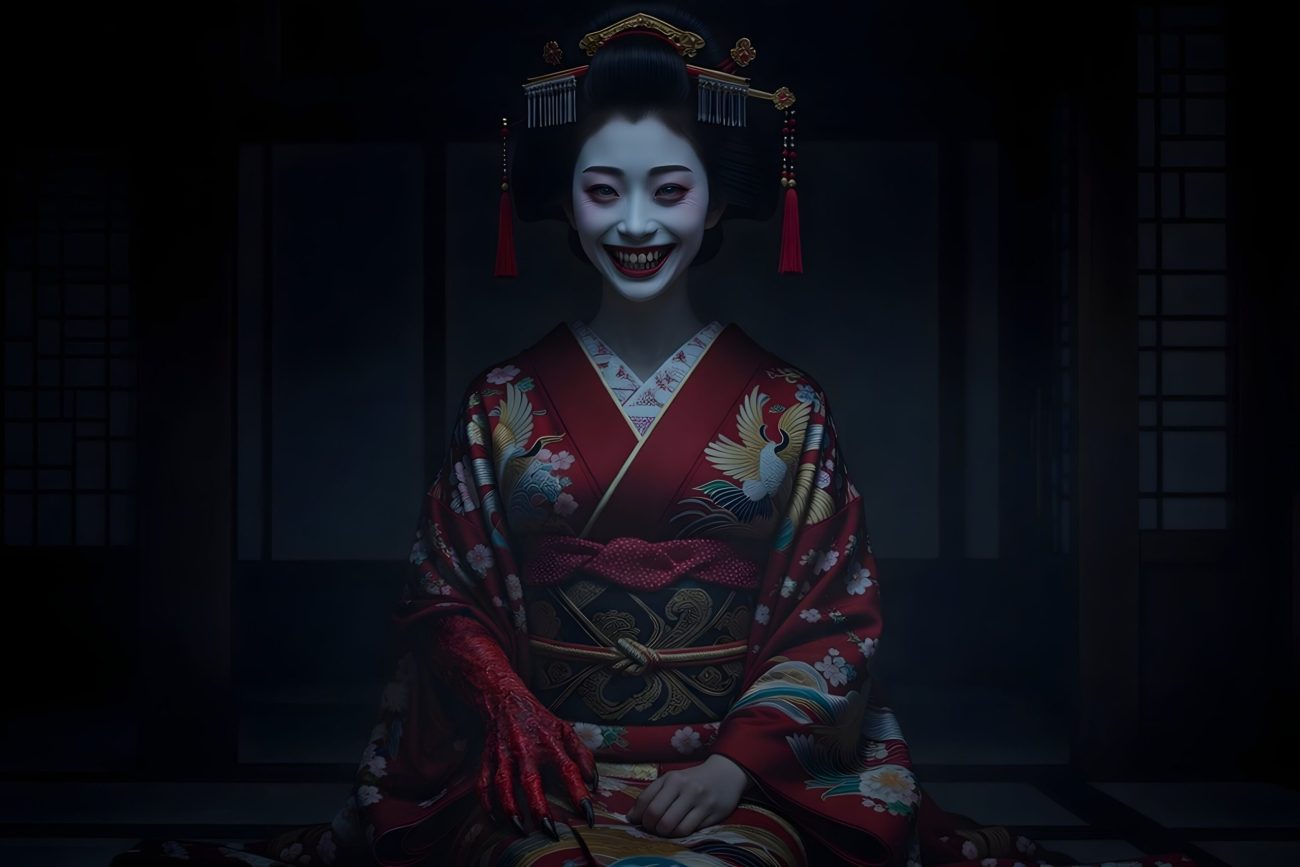
Ayashino

Tradition / Region: Japan (Edo period literary folklore)
Alternate Names:
Category: Succubus / yōkai courtesan


The Myth

Ayashino is a famed courtesan of the monster world, appearing in the tale Kwaidan Fudehajime. She belongs to Kusawara, a pleasure quarter of monsters, unlike the human Yoshiwara, where strange beings gather for entertainment, theater, and revelry.

The story is told during the travels of the warrior Sakata Kōhei, also known as Kinpei, who had earned a reputation for tormenting monsters. At one point, he even forced them to sign a written agreement promising never again to harm humans. Welcomed into the monster realm, Kōhei stayed at the residence of Mikoshi Nyūdō, where he moved freely and enjoyed their hospitality, hoping to collect stories to boast of upon his return.

Invited to a monster play—where the famous tale of Chūshingura was performed—Kōhei toured the dressing rooms of favored actors. Afterward, he was brought to Kusawara, the monster pleasure quarter. There, monster courtesans, known as shinjo, laughed upon seeing him, remarking that his strange face was pleasing, since monsters believed unusual features made one attractive.

Mikoshi Nyūdō offered to send Kōhei to Ayashino, a courtesan at the height of her beauty from the Barbara House. Ayashino, however, firmly refused. She openly mocked Kōhei, saying that despite his fame, he lacked wisdom, spoke tediously of peace and tranquility, and possessed neither wit nor spirit. She declared that she disliked him and would not go to his room, rejecting him without hesitation.

Humiliated and bored, Kōhei wandered the halls alone, listening to the conversations drifting from behind closed doors.

Later, driven by greed, Kōhei asked Mikoshi Nyūdō to give him two or three monsters so he could display them for profit. Though Mikoshi initially refused, he agonized over his role as leader and, after much sorrow, gave Kōhei his own children—one three-eyed and one-eyed—after tearfully persuading them. Kōhei placed them in a basket and returned home, quickly arranging a deal with an incense merchant.

When he opened the basket to claim his reward, the monsters vanished like a heat haze. Only then did Kōhei realize that his greed had brought about the loss, and that divine forces—moved by the sincerity of Mikoshi and his children—had returned them safely to the western sea. Ashamed, Kōhei abandoned his cruelty toward monsters and lived quietly thereafter.

Ayashino remains remembered as a proud and sharp-tongued courtesan of the monster world, unafraid to reject even a famed warrior, standing apart as a figure of dignity amid deception, revelry, and the dangers of desire.

Interpretive Lenses

Religious Readings
Philosophical Readings
Psychological Readings
Esoteric Deep Dive
Political / Social Readings
Other

Ayashino — A Hermeticism Deep Dive

Hermeticism reads succubi and courtesan-spirits not as embodiments of lust alone, but as regulatory intelligences of desire, beings that expose how attraction, valuation, and judgment circulate between worlds. Pleasure quarters are not zones of excess; they are testing chambers, where motive is refined or revealed. Ayashino is not a temptress who ensnares—she is a selective gate, refusing circulation where spirit is insufficient.

What kind of being does not seduce, but judges the quality of desire itself?


Lens Effect

Under this lens, Ayashino appears as:
a discerning intelligence of erotic and social circulation, enforcing qualitative thresholds within desire.

Primary effect on humans:
She halts exploitative intention, exposing hollowness where confidence masquerades as power.


1. Kusawara — Parallel Circuit of Desire

Kusawara mirrors Yoshiwara but operates under non-human correspondence. Hermetically, this establishes a parallel circulation, where desire is evaluated by different metrics than human prestige or reputation.

The monster pleasure quarter is not indulgent chaos; it is a closed system of valuation, in which attraction depends on resonance rather than dominance. Entry does not guarantee participation.


2. Kōhei’s Reputation — False Authority

Kōhei’s fame as a monster-tormentor represents coercive authority mistaken for merit. Hermetically, force without alignment produces hollow ascent—status unsupported by internal coherence.

His written pact with monsters is not order but external fixation, imposed stability lacking reciprocal correspondence. Such authority fails when subjected to qualitative scrutiny.


3. The Monster Theater — Reflective Illusion

The performance of Chūshingura within the monster world signals mirrored culture, where human ideals are reenacted without their assumed moral weight. Hermetically, theater functions as reflective inversion, revealing that values persist only through interpretation.

Kōhei, confident as spectator, does not realize he is already being evaluated as character, not audience.


4. Ayashino’s Refusal — Erotic Non-Correspondence

Ayashino’s rejection is not personal insult but diagnostic clarity. Hermetically, desire requires reciprocal circulation—wit, presence, and adaptive intelligence.

Her critique names spiritual inertia: tedious speech, borrowed ideals, absence of vital spark. Without active pneuma, no erotic or social exchange can occur. Refusal here is lawful non-engagement, not cruelty.


5. Wandering the Halls — Circulation Without Access

Kōhei’s aimless wandering marks failed integration. He moves through space but cannot enter exchange. Hermetically, this is circulation denied, where motion persists without transformation.

Listening at doors without invitation reinforces his role as extractive observer, incapable of mutual presence.


6. The Demand for Monsters — Greed as Misalignment

Kōhei’s request for monsters as commodities represents total correspondence failure. What was once social or ritual relation collapses into instrumental appropriation.

Mikoshi Nyūdō’s agony reveals ethical asymmetry: leadership bound to care versus power bound to profit. The sacrifice of children exposes the ultimate cost of unreciprocated extraction.


7. Vanishing Children — Divine Re-Circulation

The disappearance of the children marks corrective re-circulation. Hermetically, divine forces intervene not as punishment, but as systemic correction, returning beings to their proper domain.

The heat-haze dissolution signals illusory possession—what was never lawfully integrated cannot be retained. Kōhei’s shame arises from recognition of misalignment, the first genuine transformation he undergoes.


Final Reading

Under a Hermetic lens, Ayashino is not a seducer but a custodian of qualitative desire, refusing engagement where intention lacks vitality and reciprocity. Her power lies not in enchantment, but in discernment, exposing how coercion, fame, and greed collapse when tested within a system that values resonance over dominance.


Lesson for the Reader

Do not assume access where admiration is unearned. Desire is not conquered—it is granted through correspondence. Where wit, presence, and ethical alignment are absent, doors remain closed. What you attempt to take without reciprocity will dissolve, and the loss will reveal more about you than about what you sought.


“What cannot circulate with dignity is denied entry, no matter how loudly it demands.”

Katakana — A Hermeticism Deep Dive

Hermeticism treats vampires not as predators of blood alone, but as failed post-mortem circulations, cases where pneuma does not disengage from the corpse and instead enters a state of corrupt fixation. Death, hermetically, is a process—not an instant. The katakana arises when that process is interrupted, inverted, or sealed incorrectly, producing a body that continues to operate without lawful reintegration.

What happens when the dead do not dissolve, but continue to circulate improperly?


Lens Effect

Under this lens, the katakana appears as:
a post-mortem coagulation of corrupted pneuma, trapped in flesh beyond its lawful term.

Primary effect on humans:
It propagates misaligned circulation, spreading undead fixation rather than life through forced transmission.


1. Burial in Loose Earth — Failed Containment

The fear of burial in unconstrained soil reflects concern over insufficient fixation. Hermetically, death requires proper containment so that pneuma can disengage gradually from matter.

Loose earth permits continued circulation, allowing residual vitality to remain active. Holy soil functions as symbolic stabilizer, imposing order and sealing the corpse within a higher correspondence to prevent reversal.


2. Origins: Suicide, Excommunication — Ethical Disjunction

Those who become katakana are defined by ethical severance: self-destruction, social expulsion, or moral rupture. Hermetically, such lives end with unresolved internal correspondence, preventing smooth dissolution.

The undead state reflects unfinished integration, where psyche, pneuma, and body fail to separate cleanly, locking the deceased into distorted continuity.


3. The Grinning Face — Frozen Affect

The constant smile is not mockery but affective arrest. Hermetically, emotion must circulate to remain human. The katakana’s grin marks fixed expression, emotion coagulated into a permanent mask.

This signals loss of inner modulation. The being no longer responds—it repeats, trapped in a single expressive state.


4. Burning Spit — Externalized Corruption

Unlike vampires that bite, the katakana transmits through projected substance. The burning, bloody spit represents corrupted pneuma expelled outward, carrying misalignment beyond the original vessel.

This is infective correspondence: the victim is not attacked, but re-patterned, slowly reorganized according to the katakana’s internal disorder.


5. Forty Days — Critical Dissolution Interval

The forty-day limit marks a Hermetic threshold, a standard interval for post-mortem circulation and release. Within this window, intervention is possible because transformation is incomplete.

After forty days, coagulation finalizes. The katakana becomes structurally closed, immune to correction. Time here is not symbolic—it is operational.


6. Decapitation, Vinegar, Salt — Chemical and Symbolic Dissolution

Each destruction method targets fixation:

  • Decapitation breaks command hierarchy.
  • Vinegar induces acidic dissolution.
  • Burning nails removes grasping extensions.
  • Salt water immobilizes circulation by enforcing mineral stasis.

These are not superstitions but applied counter-operations, designed to reverse improper coagulation.


Final Reading

Under a Hermetic lens, the katakana is death arrested and inverted, a being sustained by corrupted pneuma that refuses dissolution. It spreads not hunger, but misalignment, turning others into echoes of its own unresolved state. It is feared because it proves that death, when mishandled, does not end—it loops.


Lesson for the Reader

Do not leave processes unfinished. What is not released correctly will persist incorrectly. Ethical rupture, denied endings, and forced continuities do not disappear—they re-emerge embodied. Respect thresholds, especially those that demand letting go. Fixation after its time becomes monstrous.


“What refuses to dissolve will seek new bodies in which to persist.”

Centzon Tōtōchtin — A Hermeticism Deep Dive

Hermeticism reads intoxication not as moral failure but as altered circulation of vital force, moments when pneuma is redistributed unevenly across the psyche. Fermentation is not decay but controlled dissolution, a lawful transformation in which vegetal vitality is released, intensified, and made unstable. The Centzon Tōtōchtin are not gods of excess alone; they are differentiated intelligences of intoxication, each governing a distinct configuration of imbalance produced when sap becomes spirit.

What kind of divinity multiplies not through form, but through effect?


Lens Effect

Under this lens, the Centzon Tōtōchtin appear as:
a distributed pantheon of altered states, fragmenting a single substance into innumerable psychic outcomes.

Primary effect on humans:
They destabilize unified identity, revealing how consciousness fractures differently under the same intoxicating force.


1. Four Hundred Rabbits — Non-Finite Multiplicity

The number four hundred signifies uncountable plurality, not arithmetic quantity. Hermetically, this marks indefinite differentiation, where a single principle refracts into countless expressions without exhausting itself.

The Centzon Tōtōchtin are not individuals in a crowd but modal variations of one intoxicating force. Each rabbit is a distinct configuration of imbalance, not a separate source.


2. Birth from Mayahuel — Vegetal Pneuma

Mayahuel’s nourishment of her children with maguey sap situates the rabbits within vegetal pneumatics. The sap contains latent vitality, which through fermentation undergoes dissolution followed by reanimation.

Hermetically, pulque is liberated plant-spirit, no longer fixed in growth but free to circulate through human vessels. The rabbits embody this liberated force after it has lost singular direction.


3. Pulque and Fermentation — Lawful Dissolution

Fermentation is not corruption but regulated breakdown, a process where structure loosens without annihilation. In Hermetic terms, this is soft dissolution, producing mobility rather than death.

The Centzon Tōtōchtin preside over this threshold state, where order persists but coherence wavers. Drunkenness is not chaos—it is re-patterned circulation, uneven, unstable, but still lawful.


4. Differentiated Drunkenness — Fragmented Psyche

Each rabbit governs a specific manifestation of intoxication: laughter, aggression, confusion, ritual ecstasy, or disorder. Hermetically, this reflects psyche fragmentation, where internal correspondences lose synchronization.

The same substance produces divergent outcomes because each individual’s internal alignment determines which rabbit gains dominance. Pulque does not impose behavior; it amplifies pre-existing configurations.


5. Tepoztecatl and Order Within Excess — Regulatory Node

Tepoztecatl’s association with ritual calendars and festivals identifies him as a regulatory intelligence, ensuring intoxication remains cyclic rather than catastrophic. Even excess is bound to timing, offering, and return.

Hermetically, this represents controlled imbalance, where dissolution is permitted only within structured intervals. Without such regulation, fragmentation would become permanent.


6. Rabbit Symbolism — Fertile Instability

The rabbit signifies rapid multiplication, fertility without restraint. Applied to intoxication, it marks how altered states replicate quickly, spreading through groups and ceremonies.

Hermetically, this is accelerated circulation, where force moves faster than integration can follow, producing both vitality and risk.


Final Reading

Under a Hermetic lens, the Centzon Tōtōchtin are intoxication differentiated into law, a pantheon that governs how fermented vitality fractures consciousness into many possible states. They reveal that excess is not singular, but plural—each instance shaped by internal correspondence and ritual containment.


Lesson for the Reader

Do not believe that the same influence will move all minds alike. What enters you releases what is already configured within. Intoxication does not create disorder—it selects for it. Know which rabbit you are feeding, because once circulation accelerates, control passes to the pattern already strongest.


“What ferments evenly becomes drink; what ferments unevenly becomes possession.”

Rhox

Tradition / Region: Ancient Mediterranean (Libya and wider Mediterranean)
Alternate Names:
Category: Spider / Grape


The Myth

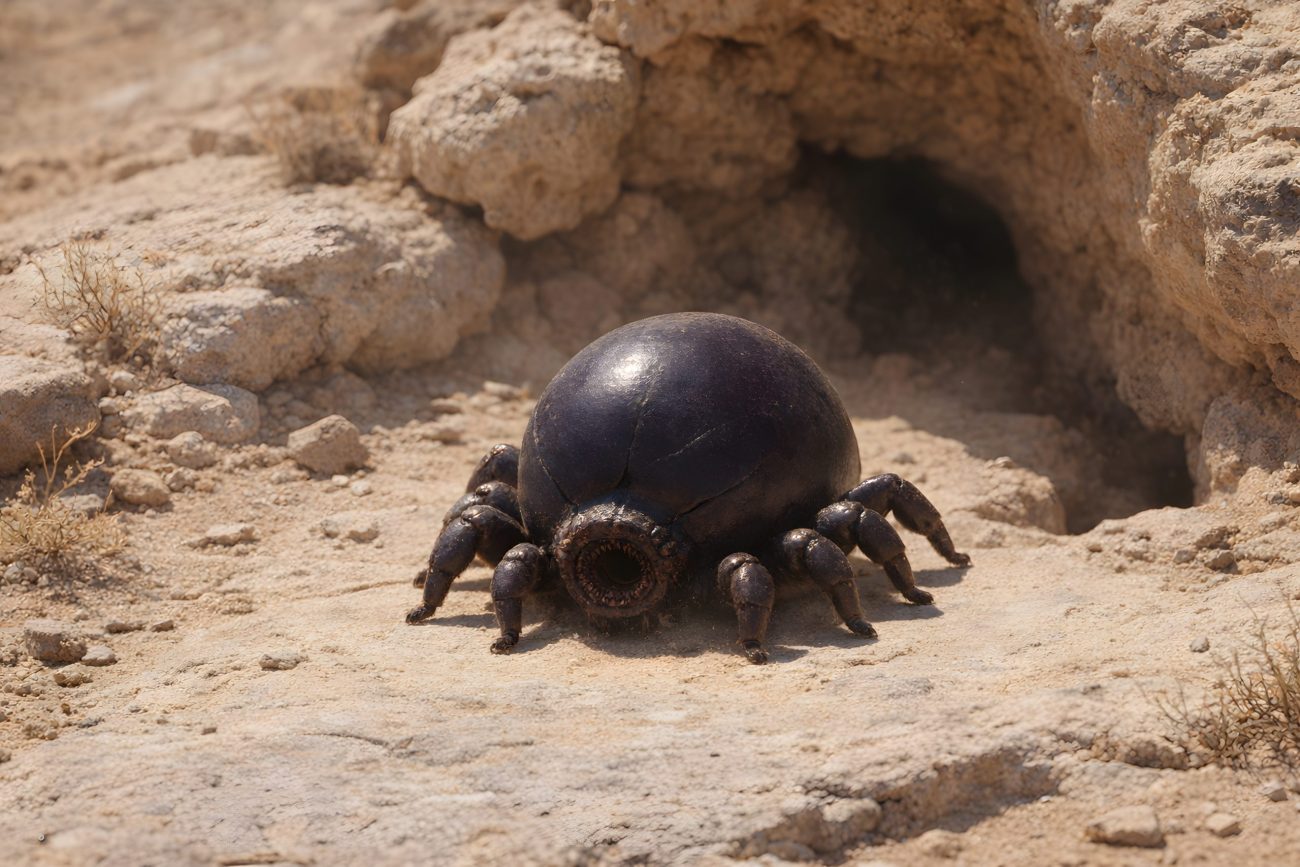
The Rhox is described in ancient sources as a deadly creature resembling a spider, known throughout parts of the Mediterranean world. Its name was said to indicate a likeness to a grape, and some associated it with a creature called the rhogalida, or “grape-spider,” spoken of on Crete. Others placed the Rhox in Libya, though it was also described as a spider commonly known around the Mediterranean.

According to descriptions attributed to Nicander, Philumenus, and Pliny, the Rhox was a kind of spider or phalangion. It was said to have a toothed mouth located in the middle of its body and short, thick legs that moved one after another in sequence. Its color was described as smoky or pitch-black.

The venom of the Rhox was believed to be instantly deadly. Those bitten were said to suffer strange and terrifying symptoms, including the appearance of web-like strands in their urine. Because of this, the Rhox was feared as one of the most lethal creeping creatures known.

Some later accounts noted that the Rhox’s form and deadly nature resembled other dangerous spiders known in the Mediterranean, though the exact identity of the creature remained uncertain. In all tellings, the Rhox endured as a small but terrifying being, whose bite brought swift and unnatural death.


Interpretive Lenses

Religious Readings
Philosophical Readings
Psychological Readings
Esoteric Deep Dive
Political / Social Readings
Other

Rhox — A Hermeticism Deep Dive

Hermeticism understands lethal micro-creatures as agents of extreme coagulation, beings in which vital force is compressed past the threshold of circulation. Not all destruction is expansive; some operates through total condensation, collapsing the interval between contact and consequence. The Rhox is not a predator in the ordinary sense, but a microcosmic execution function, where imbalance is corrected through instantaneous internal overwrite.

What kind of being exists only to annihilate the interval between cause and effect?


Lens Effect

Under this lens, the Rhox appears as:
a coagulated node of hostile correspondence, enforcing dissolution through minimal interface.

Primary effect on humans:
It abolishes temporal mediation, replacing gradual reaction with immediate systemic failure.


1. Grape-Spider Form — False Fertility and Coagulation

The association with the grape signals deceptive abundance. In Hermetic symbolism, the grape represents condensed life-force, nourishment refined into potency. In the Rhox, this condensation passes beyond viability into toxic coagulation.

The spider-form reinforces entangling proximity. The Rhox does not pursue across distance; it operates through contact-collapse, where intimacy becomes lethal. This is coagulated vitality turned adversarial, life-force rendered incompatible with organic circulation.


2. Central Mouth and Ordered Motion — Inverted Logos

The toothed mouth located at the center of the body signifies inward-directed consumption, an inversion of outward predation. Hermetically, this marks internal dissolution, where the victim’s logos is overridden from within rather than attacked externally.

The sequential, mechanical movement of the legs indicates deterministic operation. This is not instinct but fixed process, the unfolding of a pre-set function. The Rhox acts as law embodied, not as choice-bearing entity.


3. Instant Venom — Interval Collapse and Corrupted Pneuma

The immediacy of the Rhox’s venom represents interval collapse, the elimination of delay between stimulus and terminal outcome. Hermetically, this signifies total failure of mediation, where pneuma—the vital breath linking soul and body—is instantly corrupted.

The appearance of web-like strands in the urine marks foreign pattern imposition. The body’s internal correspondences are forcibly rewritten, replacing organic order with alien structural logic before resistance can arise. Death follows not through damage, but through complete correspondence inversion.


Final Reading

Under a Hermetic lens, the Rhox is lethal correspondence perfected, a being whose sole function is to demonstrate the danger of over-coagulation. It embodies the point at which vitality, compressed beyond circulation, becomes annihilative. Contact with the Rhox is not a struggle—it is a terminal reconfiguration.


Lesson for the Reader

Do not assume that consequence requires duration. Where force is overly condensed, correction arrives without negotiation. Respect what is small, dark, and structurally dense. The most dangerous imbalance is not excess movement, but excess fixation, where life becomes so concentrated that it can no longer transform—only destroy.


“What is condensed beyond circulation does not transform—it executes.”

Grant

Tradition / Region: England
Alternate Names:
Category: Horse / demon


The Myth

There is said to be in England a kind of demon called the Grant. It appears in the form of a young horse or yearling foal, standing upright on its hind legs, with bright, sparkling eyes. Though not always seen, it most often shows itself in the streets during the heat of the day or around sunset.

When danger is about to strike—especially fire or disaster expected during the coming night or the following day—the Grant emerges and runs through the streets. As it moves, it provokes dogs to bark and chase it. By pretending to flee, it draws the dogs after it, though none can ever catch it.

Through this strange behavior, the Grant serves as a warning. Its sudden appearance and commotion alert the inhabitants that danger is near. Though terrifying to those who witness it, the demon’s actions are said to protect the people by putting them on guard before disaster can strike.

Thus the Grant is remembered as a fearful yet strangely helpful presence—an illusionary demon whose wild run through the streets signals that harm is approaching.


Interpretive Lenses

Religious Readings
Philosophical Readings
Psychological Readings
Esoteric Deep Dive
Political / Social Readings
Other

Grant — A Hermeticism Deep Dive

Hermeticism reads warning-spirits not as moral agents but as anticipatory intelligences, forces that surface when future pressure begins to condense into the present. Disaster, in this view, does not arrive suddenly; it pre-forms. The Grant is not a demon of destruction, but a messenger of imminent imbalance, manifesting when danger has already entered the subtle field.

What kind of being appears only when the future has begun to leak into now?


Lens Effect

Under this lens, the Grant appears as:
a pre-disaster signal-body, translating approaching catastrophe into visible motion.

Primary effect on humans:
It disrupts complacency, converting passive time into alert readiness through fear and noise.


1. The Yearling Horse — Unfinished Force

The Grant appears as a young horse, not a fully grown one. Hermetically, this marks incipient power, energy not yet matured into full event. Disaster is present, but still forming.

Its upright posture violates natural equine behavior, signaling ontological instability—a force not yet settled into its final shape.


2. Running at Heat and Dusk — Temporal Threshold

The Grant emerges during heat or sunset, moments of energetic transition. Hermetically, thresholds are when latent forces become perceptible. Time loosens, allowing future consequence to surface briefly.

The demon’s run is not escape, but announcement: movement without destination, urgency without resolution.


3. Dogs and Pursuit — Distributed Alarm

By provoking dogs, the Grant externalizes warning. Dogs act as sensory amplifiers, spreading awareness through sound and chaos. Hermetically, this is distributed signaling: danger is too large to be communicated quietly.

The fact that the Grant is never caught confirms its nature as non-local force. One cannot seize what has not yet fully arrived.


Final Reading

Under a Hermetic lens, the Grant is disaster before disaster, an apparition that converts approaching harm into audible and visible disturbance. It does not save by intervention, but by forcing recognition while response is still possible.


Lesson for the Reader

Pay attention to disruption that has no clear cause. When noise, unease, or urgency appears without explanation, it may be the future pressing inward. Ignore such signs, and consequence arrives unannounced. Heed them, and harm loses its advantage.


“What cannot yet strike must first be heard.”

Zwanenjonkvrouw — A Hermeticism Deep Dive

Hermeticism reads shape-shifting maidens not as romantic figures, but as beings of divided ontology, whose form depends on correct alignment between essence, vessel, and will. The Zwanenjonkvrouw is not defined by love or betrayal, but by control over transformation. What is stolen is not merely a garment—it is sovereignty over state.

What happens when transformation is seized rather than consented to?


Lens Effect

Under this lens, the Zwanenjonkvrouw appears as:
a liminal being whose identity depends on voluntary circulation between forms.

Primary effect on humans:
She exposes coercion disguised as union, revealing how possession of form replaces genuine relation.


1. The Swan Shirt — Ontological Key

The zwanenhemd is not clothing but an ontological instrument. Hermetically, it functions as a transitional device, allowing essence to circulate between elemental states—air, water, and human form.

When the garment is stolen, circulation halts. The Zwanenjonkvrouw is not transformed into a woman; she is arrested as one. Identity becomes static, severed from its proper rhythm.


2. Forced Marriage — False Containment

Marriage achieved through theft is containment without alignment. Hermetically, this is illicit fixation: holding a being in a form that does not correspond to its inner nature.

The Zwanenjonkvrouw’s compliance is not harmony, but suspended imbalance. Desire persists because circulation has been interrupted, not resolved.


3. Recovery or Death — Restoration or Collapse

When the swan shirt is recovered, transformation resumes instantly. Departure is not cruelty but ontological correction. No negotiation is possible once circulation is restored.

In the Heemskerk variant, rejection replaces restoration. Without her garment and without recognition, the Zwanenjonkvrouw dies—signaling total correspondence failure. A being denied both essence and vessel cannot persist.


Final Reading

Under a Hermetic lens, the Zwanenjonkvrouw embodies transformation governed by consent. Her tragedy reveals that identity cannot be possessed without consequence, and that forms imposed through theft collapse the moment circulation is denied or restored.


Lesson for the Reader

Do not confuse proximity with union. When you bind what must move freely, you create a fragile stillness that ends in rupture or loss. What returns to itself does not explain its leaving—and what is denied its nature cannot survive being chosen last.


“What is held against its rhythm either escapes or breaks.”

Orabi Souke — A Hermeticism Deep Dive

Hermeticism approaches mountain beings as reactive intelligences, presences that do not initiate contact but mirror force directed toward them. Mountains are not silent matter; they are compressed stability, domains where action rebounds rather than disperses. Orabi Souke is not an aggressor—it is retaliatory law embodied, revealing how violence aimed at the environment returns amplified.

What kind of being answers only after you act—and never first?


Lens Effect

Under this lens, Orabi Souke appears as:
a reflexive guardian of place, manifesting consequence rather than intention.

Primary effect on humans:
It disciplines aggression, training restraint by ensuring that force immediately rebounds upon its source.


1. Encounter and Retaliation — Reflexive Law

Orabi Souke does nothing until struck. Hermetically, this marks reflexive causality, where action and consequence are tightly bound with no delay. The mountain does not judge motive; it responds to impact.

This makes Orabi Souke a threshold regulator. Those who pass without hostility remain untouched; those who impose force are met with immediate correction.


2. The Shout — Acoustic Manifestation

The name’s link to orabu (“to shout”) points to sound as presence, not speech. Hermetically, sound functions as pressure made audible, the first sign of reaction before form appears.

Unlike echo spirits such as Yamabiko, Orabi Souke’s sound is not repetition but warning resonance—a signal that force has entered a domain where return is guaranteed.


3. Obscure Form and Name — Non-Fixed Identity

The uncertainty around souke / soute and the creature’s indistinct appearance indicate non-fixed manifestation. Hermetically, beings that enforce law do not require stable form; their authority lies in effect, not visibility.

Orabi Souke remains vague because clarity is unnecessary. What matters is response, not recognition.


Final Reading

Under a Hermetic lens, Orabi Souke is consequence given locality, a mountain-bound intelligence that ensures aggression never travels outward unchecked. It teaches that some domains do not absorb force—they return it intact.


Lesson for the Reader

Do not test what does not provoke you. Where power is compressed, restraint is the only safe movement. If you strike first, you forfeit distance between action and consequence. Learn where silence is not emptiness, but held response.


“Some places do not answer questions—only blows.”