Great-hand

Tradition / Region: Scotland (Edinburgh, Old Town)
Alternate Names:
Category: House dweller / subterranean horror


The Myth

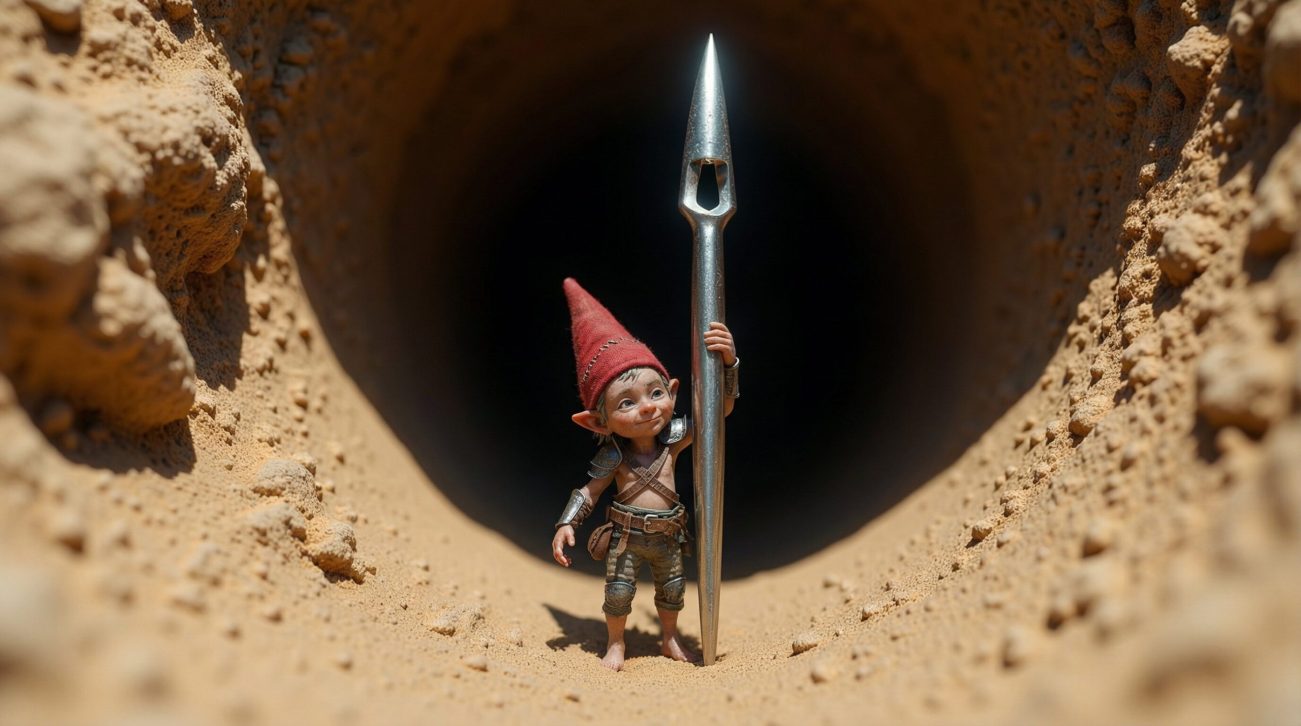
Beneath the Old Town of Edinburgh lies a network of cellars, tunnels, and hidden passages. Among these underground spaces is a tunnel said to run beneath the Royal Mile, stretching from the Castle to the Palace of Holyrood. Long ago, soldiers used this passage to launch surprise attacks, but over time it fell into disuse. After that, the tunnel was said to become the lair of a being known as Great-hand, and no one who entered it ever returned alive.

Great-hand is never seen in full. The only part of it that has ever been described is a single hand—enormous, grisly, and inhuman. Its fingernails are said to be long and curved like the talons of an eagle. Whether this hand is attached to a body or exists alone is unknown, as no one has ever seen anything beyond it.

After the tunnel had been avoided for a long time, a piper once declared that he would pass through it to prove that it could be crossed safely. He said he would play his pipes the entire way so that those above ground could follow his progress by sound. Taking his dog with him, he entered the tunnel through a cave near the Castle. As he moved underground, the sound of the pipes could be heard descending the hill.

When the music reached the area of the Heart of Midlothian, it suddenly stopped. Alarmed, those listening rushed back to the tunnel entrance. From the darkness emerged only the dog, running in terror, its fur completely gone. The piper was never seen again.

After this event, the tunnel was sealed at both ends. Stories of Great-hand spread, and similar tales were told across Scotland of haunted caves, lost pipers, and dogs driven hairless by fear. Great-hand remained beneath the city, an unseen presence in the darkness, guarding the underground and claiming any who dared to enter.


Interpretive Lenses

Religious Readings
Philosophical Readings
Psychological Readings
Esoteric Deep Dive
Political / Social Readings
Other

Great-hand — A Hermeticism Deep Dive

Hermeticism understands subterranean horrors as manifestations of chthonic fixation, forces generated when circulation is driven below visibility and denied release. Underground spaces are not empty voids but compressed strata of memory, violence, and latent will. Great-hand is not a creature lurking beneath Edinburgh; it is partial manifestation of an arrested totality, where only the operative organ breaches the surface of perception.

What kind of being never appears whole because wholeness itself would require release?


Lens Effect

Under this lens, Great-hand appears as:
a fragmentary chthonic executor, a single operative limb of a sealed and unresolved presence.

Primary effect on humans:
It terminates exploratory circulation, converting descent and curiosity into irreversible loss.


1. The Subterranean Tunnel — Infracosmic Compression

The sealed passage beneath the Royal Mile represents infracosmic containment, a zone where historical violence and strategic movement were once active but later forced into dormancy. Hermetically, what is suppressed without resolution does not dissolve—it condenses.

Great-hand emerges where circulation has been cut off but not neutralized. The tunnel becomes a coagulative chamber, transforming past function into present hazard.


2. The Hand Alone — Operative Fragmentation

That only the hand is ever seen marks functional dismemberment. Hermetically, this indicates instrumental survival without governing intellect. The hand exists to seize, not to know.

This is partial embodiment, where a single action—grasping, claiming, arresting—persists after the total being has collapsed or been sealed. The talon-like nails signify irreversible capture, a grip without negotiation.


3. The Piper’s Music — Sonic Tether Failure

The pipes act as a sonic filament, an attempt to maintain audible correspondence between surface and depth. Hermetically, sound is a fragile mode of circulation—effective only while resonance holds.

When the music stops at the Heart of Midlothian, the tether snaps. Circulation collapses. The hairless dog’s return signals total psychic discharge, fear sufficient to strip even animal coherence. What entered the infracosm did not die—it was withdrawn from accessible order.


Final Reading

Under a Hermetic lens, Great-hand is the grasp of what was never reintegrated, a fragmentary executor generated by sealed violence and denied release. It does not hunt—it claims, enforcing the law that some depths, once closed, do not permit renewed passage.


Lesson for the Reader

Do not mistake silence for emptiness. Where circulation has been cut without resolution, descent becomes extraction by another order. Some thresholds are not guarded by faces or voices, but by functions that remain after meaning is gone. Enter such places, and only the part of you that can be taken will return—if anything does.


“What is sealed without release does not forget—it reaches.”

Nurikabe

Tradition / Region: Japan (Edo-period yōkai scrolls)
Alternate Names:
Category: Yōkai / Lion / Dog


The Myth

In illustrated yōkai scrolls from Japan, a creature known as the Nurikabe appears in a form unlike the better-known invisible wall of later folklore. This Nurikabe is a tangible beast with four legs and a powerful body. Its most striking feature is its enormous face, which bears three eyes that shine with an unnatural blue light. It has large, drooping ears like those of an elephant and two black tusks that curve outward. Its body is painted white, giving it a ghostly and imposing appearance. Some describe it as resembling a dog or a lion, though it does not fully match any known animal.

In the scrolls where it appears, the Nurikabe is shown near crashing waves. Behind it emerge figures such as Umi-otoko, a human seaman, and Umi-bōzu, a fearsome sea spirit. This setting places the Nurikabe at the boundary between land and sea, standing where the human world meets the supernatural. It does not act directly against the figures shown, but its presence dominates the scene, suggesting a powerful being that guards or obstructs passage.

The scroll depicting this Nurikabe is dated to the early nineteenth century. No clear written legend accompanies it, and its precise origin is unknown. It is uncertain whether this beast represents a specific local tradition or whether it was created by the artist as a yōkai form inspired by existing beliefs. Its connection to the later Nurikabe known for blocking travelers’ paths is not clearly stated in the original material.

As it appears in the scroll, the Nurikabe remains an enigmatic creature: a massive, watchful being standing firm amid waves and spirits, neither clearly hostile nor welcoming, marking a place where movement forward is uncertain and dangerous.


Interpretive Lenses

Religious Readings
Philosophical Readings
Psychological Readings
Esoteric Deep Dive
Political / Social Readings
Other

Nurikabe (Beast Form) — A Hermeticism Deep Dive

Hermeticism understands obstruction not as negation, but as active resistance within circulation, moments where movement encounters condensed limit. Boundaries are not empty lines; they are intelligences of refusal that preserve order by denying passage. The beast-form Nurikabe is not an accidental monster-image—it is resistance given body, appearing where transition would otherwise proceed unchecked.

What kind of guardian does not attack, but simply makes advance impossible?


Lens Effect

Under this lens, the Nurikabe appears as:
a coagulated boundary intelligence, enforcing stoppage at liminal thresholds.

Primary effect on humans:
It arrests momentum, forcing confrontation with limits rather than confrontation with enemies.


1. The Massive Body and Triple Eyes — Total Surveillance

The Nurikabe’s enormous face and three glowing eyes indicate non-local perception. Hermetically, multiple eyes signify simultaneous awareness across planes, perception not bound to linear sight.

Its white body marks fixed manifestation, matter stabilized into immobility. This is not camouflage or disguise, but presence that cannot be ignored. To see the Nurikabe is already to be stopped.


2. Beast Without Category — Ontological Refusal

Dog, lion, elephant—yet fully none. This failure of classification signals ontological refusal. Hermetically, beings that function as limits resist symbolic placement; they cannot be domesticated by naming.

The Nurikabe does not belong to a category because it exists to terminate movement between categories. Classification would imply passage. Refusal preserves boundary.


3. Shoreline Placement — Threshold Enforcement

Positioned between land and sea, with Umi-otoko and Umi-bōzu behind it, the Nurikabe occupies a primary liminal axis. Hermetically, land and sea represent fixed order and fluid chaos. The Nurikabe stands where circulation must pause before transition.

It does not strike because obstruction is sufficient. Movement halts not from fear, but from impossibility.


4. From Wall to Beast — Embodied Resistance

Later folklore renders Nurikabe as an invisible wall. The beast-form reveals the same principle prior to abstraction. Hermetically, this is boundary before symbol, resistance experienced as presence rather than concept.

The beast does not explain itself. It enforces limit through mass, not logic.


Final Reading

Under a Hermetic lens, the beast-form Nurikabe is boundary incarnate, a guardian that halts circulation by existing too fully to bypass. It demonstrates that not all obstacles oppose—some simply occupy the space movement would require.


Lesson for the Reader

When advance fails without conflict, do not search for an enemy. Some limits are not meant to be overcome but recognized. Pressing against them wastes force; understanding them redirects it. Where the path disappears, motion must become orientation rather than progress.


“What blocks without striking teaches where movement no longer applies.”

Ayashino

Tradition / Region: Japan (Edo period literary folklore)
Alternate Names:
Category: Succubus / yōkai courtesan


The Myth

Ayashino is a famed courtesan of the monster world, appearing in the tale Kwaidan Fudehajime. She belongs to Kusawara, a pleasure quarter of monsters, unlike the human Yoshiwara, where strange beings gather for entertainment, theater, and revelry.

The story is told during the travels of the warrior Sakata Kōhei, also known as Kinpei, who had earned a reputation for tormenting monsters. At one point, he even forced them to sign a written agreement promising never again to harm humans. Welcomed into the monster realm, Kōhei stayed at the residence of Mikoshi Nyūdō, where he moved freely and enjoyed their hospitality, hoping to collect stories to boast of upon his return.

Invited to a monster play—where the famous tale of Chūshingura was performed—Kōhei toured the dressing rooms of favored actors. Afterward, he was brought to Kusawara, the monster pleasure quarter. There, monster courtesans, known as shinjo, laughed upon seeing him, remarking that his strange face was pleasing, since monsters believed unusual features made one attractive.

Mikoshi Nyūdō offered to send Kōhei to Ayashino, a courtesan at the height of her beauty from the Barbara House. Ayashino, however, firmly refused. She openly mocked Kōhei, saying that despite his fame, he lacked wisdom, spoke tediously of peace and tranquility, and possessed neither wit nor spirit. She declared that she disliked him and would not go to his room, rejecting him without hesitation.

Humiliated and bored, Kōhei wandered the halls alone, listening to the conversations drifting from behind closed doors.

Later, driven by greed, Kōhei asked Mikoshi Nyūdō to give him two or three monsters so he could display them for profit. Though Mikoshi initially refused, he agonized over his role as leader and, after much sorrow, gave Kōhei his own children—one three-eyed and one-eyed—after tearfully persuading them. Kōhei placed them in a basket and returned home, quickly arranging a deal with an incense merchant.

When he opened the basket to claim his reward, the monsters vanished like a heat haze. Only then did Kōhei realize that his greed had brought about the loss, and that divine forces—moved by the sincerity of Mikoshi and his children—had returned them safely to the western sea. Ashamed, Kōhei abandoned his cruelty toward monsters and lived quietly thereafter.

Ayashino remains remembered as a proud and sharp-tongued courtesan of the monster world, unafraid to reject even a famed warrior, standing apart as a figure of dignity amid deception, revelry, and the dangers of desire.


Interpretive Lenses

Religious Readings
Philosophical Readings
Psychological Readings
Esoteric Deep Dive
Political / Social Readings
Other

Ayashino — A Hermeticism Deep Dive

Hermeticism reads succubi and courtesan-spirits not as embodiments of lust alone, but as regulatory intelligences of desire, beings that expose how attraction, valuation, and judgment circulate between worlds. Pleasure quarters are not zones of excess; they are testing chambers, where motive is refined or revealed. Ayashino is not a temptress who ensnares—she is a selective gate, refusing circulation where spirit is insufficient.

What kind of being does not seduce, but judges the quality of desire itself?


Lens Effect

Under this lens, Ayashino appears as:
a discerning intelligence of erotic and social circulation, enforcing qualitative thresholds within desire.

Primary effect on humans:
She halts exploitative intention, exposing hollowness where confidence masquerades as power.


1. Kusawara — Parallel Circuit of Desire

Kusawara mirrors Yoshiwara but operates under non-human correspondence. Hermetically, this establishes a parallel circulation, where desire is evaluated by different metrics than human prestige or reputation.

The monster pleasure quarter is not indulgent chaos; it is a closed system of valuation, in which attraction depends on resonance rather than dominance. Entry does not guarantee participation.


2. Kōhei’s Reputation — False Authority

Kōhei’s fame as a monster-tormentor represents coercive authority mistaken for merit. Hermetically, force without alignment produces hollow ascent—status unsupported by internal coherence.

His written pact with monsters is not order but external fixation, imposed stability lacking reciprocal correspondence. Such authority fails when subjected to qualitative scrutiny.


3. The Monster Theater — Reflective Illusion

The performance of Chūshingura within the monster world signals mirrored culture, where human ideals are reenacted without their assumed moral weight. Hermetically, theater functions as reflective inversion, revealing that values persist only through interpretation.

Kōhei, confident as spectator, does not realize he is already being evaluated as character, not audience.


4. Ayashino’s Refusal — Erotic Non-Correspondence

Ayashino’s rejection is not personal insult but diagnostic clarity. Hermetically, desire requires reciprocal circulation—wit, presence, and adaptive intelligence.

Her critique names spiritual inertia: tedious speech, borrowed ideals, absence of vital spark. Without active pneuma, no erotic or social exchange can occur. Refusal here is lawful non-engagement, not cruelty.


5. Wandering the Halls — Circulation Without Access

Kōhei’s aimless wandering marks failed integration. He moves through space but cannot enter exchange. Hermetically, this is circulation denied, where motion persists without transformation.

Listening at doors without invitation reinforces his role as extractive observer, incapable of mutual presence.


6. The Demand for Monsters — Greed as Misalignment

Kōhei’s request for monsters as commodities represents total correspondence failure. What was once social or ritual relation collapses into instrumental appropriation.

Mikoshi Nyūdō’s agony reveals ethical asymmetry: leadership bound to care versus power bound to profit. The sacrifice of children exposes the ultimate cost of unreciprocated extraction.


7. Vanishing Children — Divine Re-Circulation

The disappearance of the children marks corrective re-circulation. Hermetically, divine forces intervene not as punishment, but as systemic correction, returning beings to their proper domain.

The heat-haze dissolution signals illusory possession—what was never lawfully integrated cannot be retained. Kōhei’s shame arises from recognition of misalignment, the first genuine transformation he undergoes.


Final Reading

Under a Hermetic lens, Ayashino is not a seducer but a custodian of qualitative desire, refusing engagement where intention lacks vitality and reciprocity. Her power lies not in enchantment, but in discernment, exposing how coercion, fame, and greed collapse when tested within a system that values resonance over dominance.


Lesson for the Reader

Do not assume access where admiration is unearned. Desire is not conquered—it is granted through correspondence. Where wit, presence, and ethical alignment are absent, doors remain closed. What you attempt to take without reciprocity will dissolve, and the loss will reveal more about you than about what you sought.


“What cannot circulate with dignity is denied entry, no matter how loudly it demands.”

Katakana

Tradition / Region: Greek island folklore (Crete; Rhodes)
Alternate Names:
Category: Bat / vampire


The Myth

On the Greek islands of Crete and Rhodes, people tell of a vampire known as the katakana. It is believed that certain dead do not remain at rest. In older times, Cretans feared that if a person were buried in loose, unconstrained earth, the dead might rise again as a katakana. Because of this danger, holy soil was brought from sacred places, including the Holy Sepulcher, and sprinkled over cemeteries to prevent the dead from returning.

The katakana was said to arise from the bodies of suicides, evil people, or those who had been excommunicated from the church. After death, such individuals could transform into vampires, retaining a distorted likeness of their former selves. The katakana was described as constantly smiling, its teeth always visible, giving it a chilling and unnatural expression.

Unlike some other undead beings, the katakana did not rely solely on biting to create others of its kind. Instead, it was said to spit a burning, bloody discharge at people. If this sticky substance struck its target, the victim would in time become a katakana as well, transformed into a vampire like the one that cursed them.

People believed the katakana could be driven away temporarily by gunshots, but destroying it required strict measures. To kill it permanently, the vampire had to be decapitated, or at least struck in the head with a sharp-edged weapon. Its severed head was then boiled in vinegar, and its nails were burned. Another method involved trapping the katakana in a container filled with salt water, which could immobilize it.

These actions had to be carried out within the first forty days after the vampire’s rise. If this time passed, the katakana was believed to become indestructible, immune to all attempts to destroy it. Because of this, vigilance and speed were considered essential when signs of a katakana appeared.

Beliefs about the katakana were understood as a local island form of broader Greek vampire traditions, yet its distinctive grin, burning spit, and specific methods of destruction set it apart as one of the most feared undead beings of the Aegean islands.


Interpretive Lenses

Religious Readings
Philosophical Readings
Psychological Readings
Esoteric Deep Dive
Political / Social Readings
Other

Katakana — A Hermeticism Deep Dive

Hermeticism treats vampires not as predators of blood alone, but as failed post-mortem circulations, cases where pneuma does not disengage from the corpse and instead enters a state of corrupt fixation. Death, hermetically, is a process—not an instant. The katakana arises when that process is interrupted, inverted, or sealed incorrectly, producing a body that continues to operate without lawful reintegration.

What happens when the dead do not dissolve, but continue to circulate improperly?


Lens Effect

Under this lens, the katakana appears as:
a post-mortem coagulation of corrupted pneuma, trapped in flesh beyond its lawful term.

Primary effect on humans:
It propagates misaligned circulation, spreading undead fixation rather than life through forced transmission.


1. Burial in Loose Earth — Failed Containment

The fear of burial in unconstrained soil reflects concern over insufficient fixation. Hermetically, death requires proper containment so that pneuma can disengage gradually from matter.

Loose earth permits continued circulation, allowing residual vitality to remain active. Holy soil functions as symbolic stabilizer, imposing order and sealing the corpse within a higher correspondence to prevent reversal.


2. Origins: Suicide, Excommunication — Ethical Disjunction

Those who become katakana are defined by ethical severance: self-destruction, social expulsion, or moral rupture. Hermetically, such lives end with unresolved internal correspondence, preventing smooth dissolution.

The undead state reflects unfinished integration, where psyche, pneuma, and body fail to separate cleanly, locking the deceased into distorted continuity.


3. The Grinning Face — Frozen Affect

The constant smile is not mockery but affective arrest. Hermetically, emotion must circulate to remain human. The katakana’s grin marks fixed expression, emotion coagulated into a permanent mask.

This signals loss of inner modulation. The being no longer responds—it repeats, trapped in a single expressive state.


4. Burning Spit — Externalized Corruption

Unlike vampires that bite, the katakana transmits through projected substance. The burning, bloody spit represents corrupted pneuma expelled outward, carrying misalignment beyond the original vessel.

This is infective correspondence: the victim is not attacked, but re-patterned, slowly reorganized according to the katakana’s internal disorder.


5. Forty Days — Critical Dissolution Interval

The forty-day limit marks a Hermetic threshold, a standard interval for post-mortem circulation and release. Within this window, intervention is possible because transformation is incomplete.

After forty days, coagulation finalizes. The katakana becomes structurally closed, immune to correction. Time here is not symbolic—it is operational.


6. Decapitation, Vinegar, Salt — Chemical and Symbolic Dissolution

Each destruction method targets fixation:

  • Decapitation breaks command hierarchy.
  • Vinegar induces acidic dissolution.
  • Burning nails removes grasping extensions.
  • Salt water immobilizes circulation by enforcing mineral stasis.

These are not superstitions but applied counter-operations, designed to reverse improper coagulation.


Final Reading

Under a Hermetic lens, the katakana is death arrested and inverted, a being sustained by corrupted pneuma that refuses dissolution. It spreads not hunger, but misalignment, turning others into echoes of its own unresolved state. It is feared because it proves that death, when mishandled, does not end—it loops.


Lesson for the Reader

Do not leave processes unfinished. What is not released correctly will persist incorrectly. Ethical rupture, denied endings, and forced continuities do not disappear—they re-emerge embodied. Respect thresholds, especially those that demand letting go. Fixation after its time becomes monstrous.


“What refuses to dissolve will seek new bodies in which to persist.”

Centzon Tōtōchtin

Tradition / Region: Mexica (Aztec) mythology
Alternate Names: Centzontōtōchtin (“Four Hundred Rabbits”)
Category: Rabbit / deity


The Myth

In Mexica mythology, the Centzon Tōtōchtin are a great company of divine rabbits known as the Four Hundred Rabbits. They are gods associated with pulque, the fermented drink made from the maguey plant, and they are said to gather frequently for feasts and drunken celebrations. The number four hundred does not signify a precise count, but rather an uncountable multitude.

The Centzon Tōtōchtin are the children of Mayahuel, the goddess of the maguey plant, and Patecatl. Mayahuel was believed to nourish her children with the sap of the maguey, which became pulque. Through this parentage, the rabbits are bound to the plant and its intoxicating drink.

Each of the Centzon Tōtōchtin embodies a different aspect of drunkenness and behavior brought on by pulque. Among them are Tepoztecatl, Texcatzonatl, Colhuatzincatl, and Macuiltochtli, whose name means “Five Rabbit.” Tepoztecatl is often described as their leader and is closely associated with ritual calendars and sacred festivals.

The rabbits are said to assemble together, drinking pulque and celebrating noisily. In these gatherings, they represent the many forms intoxication can take, from joy and laughter to disorder and excess. Their presence explains why different people react differently when they drink, each one being touched by a different rabbit god.

The Centzon Tōtōchtin appear in myths surrounding the discovery and ritual use of pulque. In some stories, a rabbit is involved in revealing the maguey’s hidden properties, linking the animal directly to the sacred drink. Shrines and temples, including those dedicated to Tepoztecatl, honored these gods through offerings of pulque during festivals and ceremonies.

Thus, the Centzon Tōtōchtin remain remembered as a divine multitude of rabbit gods, born from the maguey, gathering endlessly in celebration, and inseparably bound to pulque and its effects among gods and humans alike.


Interpretive Lenses

Religious Readings
Philosophical Readings
Psychological Readings
Esoteric Deep Dive
Political / Social Readings
Other

Centzon Tōtōchtin — A Hermeticism Deep Dive

Hermeticism reads intoxication not as moral failure but as altered circulation of vital force, moments when pneuma is redistributed unevenly across the psyche. Fermentation is not decay but controlled dissolution, a lawful transformation in which vegetal vitality is released, intensified, and made unstable. The Centzon Tōtōchtin are not gods of excess alone; they are differentiated intelligences of intoxication, each governing a distinct configuration of imbalance produced when sap becomes spirit.

What kind of divinity multiplies not through form, but through effect?


Lens Effect

Under this lens, the Centzon Tōtōchtin appear as:
a distributed pantheon of altered states, fragmenting a single substance into innumerable psychic outcomes.

Primary effect on humans:
They destabilize unified identity, revealing how consciousness fractures differently under the same intoxicating force.


1. Four Hundred Rabbits — Non-Finite Multiplicity

The number four hundred signifies uncountable plurality, not arithmetic quantity. Hermetically, this marks indefinite differentiation, where a single principle refracts into countless expressions without exhausting itself.

The Centzon Tōtōchtin are not individuals in a crowd but modal variations of one intoxicating force. Each rabbit is a distinct configuration of imbalance, not a separate source.


2. Birth from Mayahuel — Vegetal Pneuma

Mayahuel’s nourishment of her children with maguey sap situates the rabbits within vegetal pneumatics. The sap contains latent vitality, which through fermentation undergoes dissolution followed by reanimation.

Hermetically, pulque is liberated plant-spirit, no longer fixed in growth but free to circulate through human vessels. The rabbits embody this liberated force after it has lost singular direction.


3. Pulque and Fermentation — Lawful Dissolution

Fermentation is not corruption but regulated breakdown, a process where structure loosens without annihilation. In Hermetic terms, this is soft dissolution, producing mobility rather than death.

The Centzon Tōtōchtin preside over this threshold state, where order persists but coherence wavers. Drunkenness is not chaos—it is re-patterned circulation, uneven, unstable, but still lawful.


4. Differentiated Drunkenness — Fragmented Psyche

Each rabbit governs a specific manifestation of intoxication: laughter, aggression, confusion, ritual ecstasy, or disorder. Hermetically, this reflects psyche fragmentation, where internal correspondences lose synchronization.

The same substance produces divergent outcomes because each individual’s internal alignment determines which rabbit gains dominance. Pulque does not impose behavior; it amplifies pre-existing configurations.


5. Tepoztecatl and Order Within Excess — Regulatory Node

Tepoztecatl’s association with ritual calendars and festivals identifies him as a regulatory intelligence, ensuring intoxication remains cyclic rather than catastrophic. Even excess is bound to timing, offering, and return.

Hermetically, this represents controlled imbalance, where dissolution is permitted only within structured intervals. Without such regulation, fragmentation would become permanent.


6. Rabbit Symbolism — Fertile Instability

The rabbit signifies rapid multiplication, fertility without restraint. Applied to intoxication, it marks how altered states replicate quickly, spreading through groups and ceremonies.

Hermetically, this is accelerated circulation, where force moves faster than integration can follow, producing both vitality and risk.


Final Reading

Under a Hermetic lens, the Centzon Tōtōchtin are intoxication differentiated into law, a pantheon that governs how fermented vitality fractures consciousness into many possible states. They reveal that excess is not singular, but plural—each instance shaped by internal correspondence and ritual containment.


Lesson for the Reader

Do not believe that the same influence will move all minds alike. What enters you releases what is already configured within. Intoxication does not create disorder—it selects for it. Know which rabbit you are feeding, because once circulation accelerates, control passes to the pattern already strongest.


“What ferments evenly becomes drink; what ferments unevenly becomes possession.”