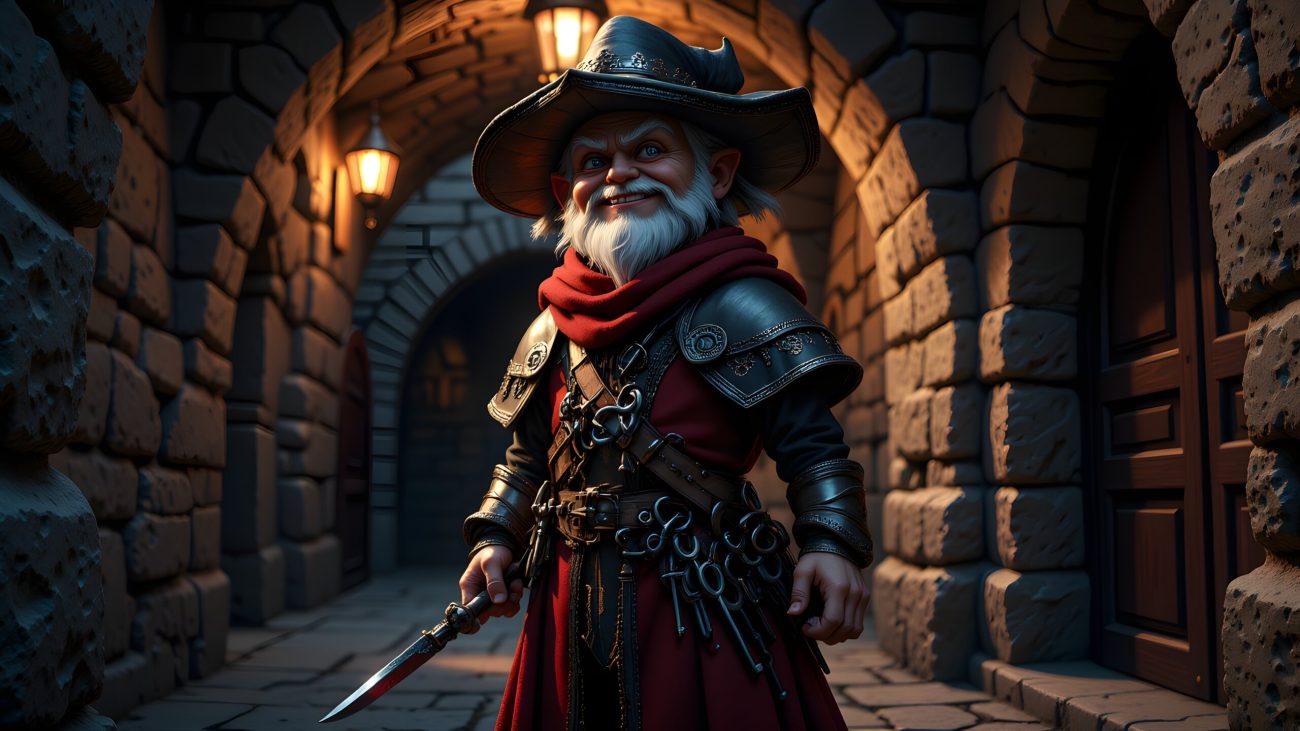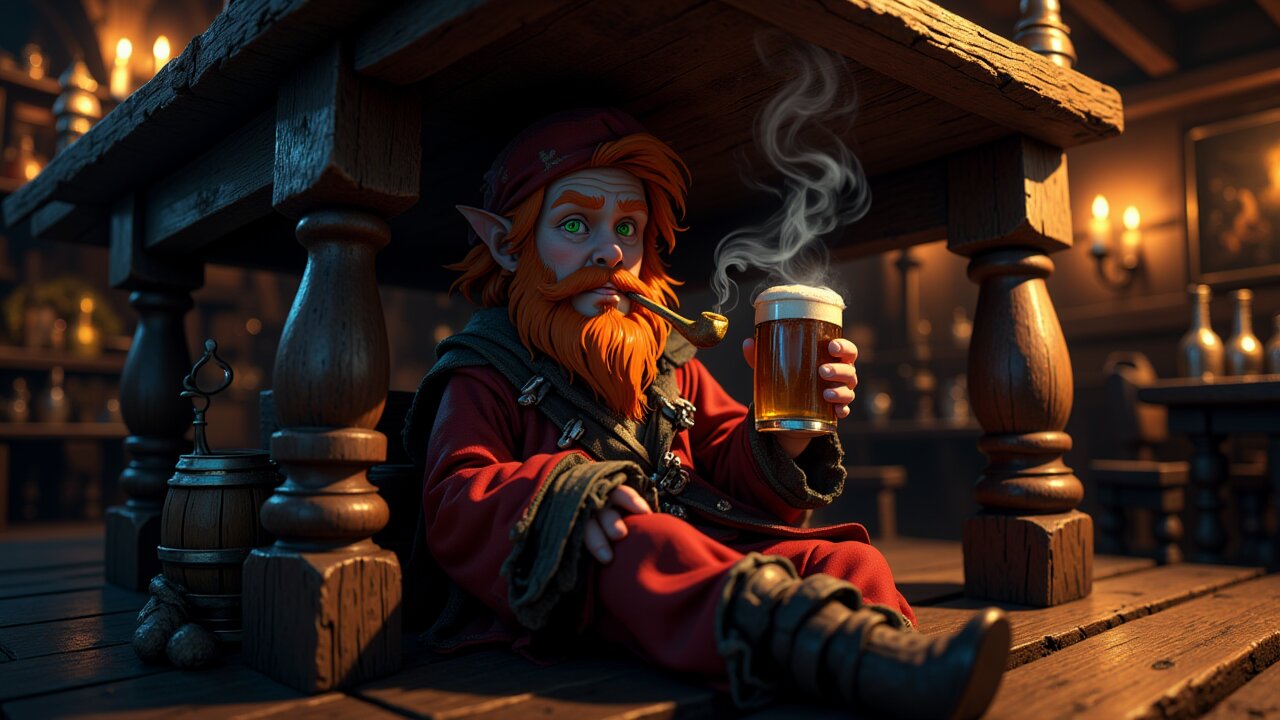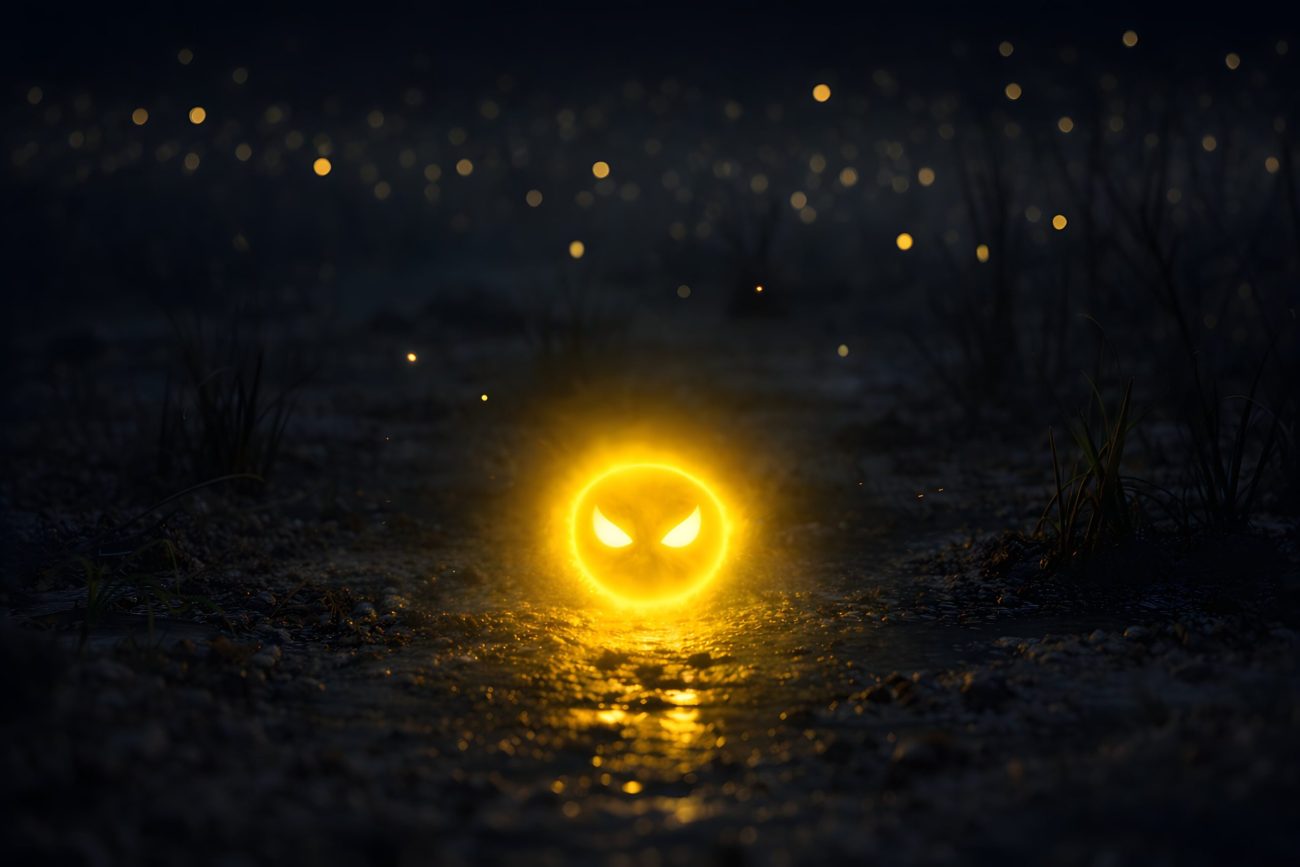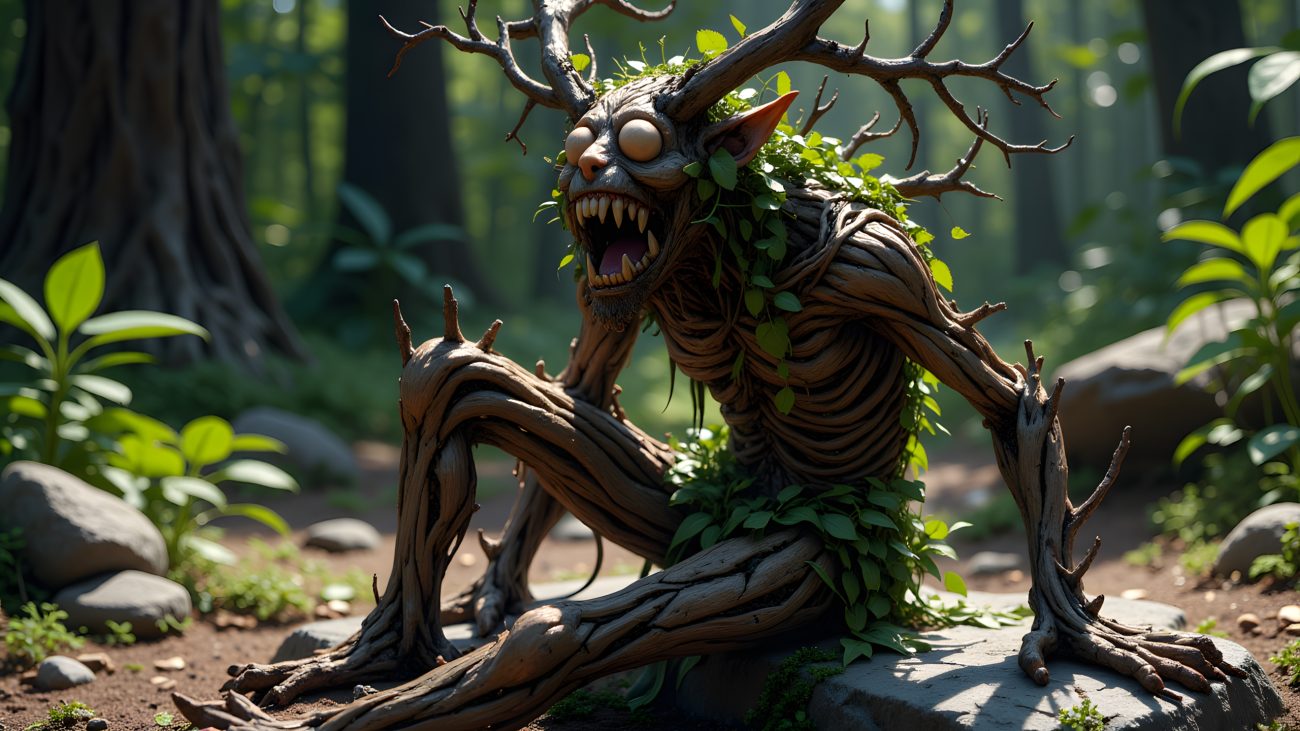
Xuanyu

Tradition / Region: China (Jin dynasty and later traditions)
Alternate Names: Black Fish, River Spirit
Category: Fish / river spirit


The Myth

Xuanyu is a mythical black fish recorded in ancient Chinese texts. Its origin is closely tied to the great flood myths of early China. According to tradition, Gun, who was ordered by Yao to control the floods, failed in his task after nine years. In despair, Gun drowned himself in a place called Yuyuan. After sinking into the waters, he transformed into a Xuanyu.

As a Xuanyu, Gun appeared as a vast black fish. It was said to rise from the water at times, shaking its whiskers and scales as it floated across the waves. Those who witnessed it believed they were seeing a river spirit. During seasonal rites and sacrificial ceremonies, black fish and dragons were often seen leaping from the water, filling observers with awe and fear.

Other records describe the Xuanyu as an enormous creature, said to reach a thousand feet in length. One account tells of such a black fish appearing near the sea, dying there, and lying between river and ocean. Sages regarded the black fish as a divine being and combined the character xuan (dark, mysterious) with yu (fish) to name it Xuanyu.

Additional traditions state that another figure, Shen Yuyuan, also transformed into a black fish after death. In these accounts, the Xuanyu was worshipped as a powerful water spirit. Shrines were built in its honor near mountains and coastlines, and sacrifices were offered to it throughout the four seasons. People claimed that when the Xuanyu manifested its power, the shallow sea would rise and water would spray upward for hundreds of feet.

Across these tellings, the Xuanyu appears as a transformed being born of death and water, moving between river and sea, feared and revered as a divine black fish whose presence revealed the lingering power of those who failed, perished, and yet endured within the waters.


Interpretive Lenses

Religious Readings
Philosophical Readings
Psychological Readings
Esoteric Deep Dive
Political / Social Readings
Other

Xuanyu — A Hermeticism Deep Dive

Hermeticism understands flood-spirits and metamorphic river beings as post-failure survivals of operative will, entities born when teleological collapse does not result in annihilation but in hydro-coagulation. Water, hermetically, is the medium where intention dissolves without disappearing, where failed action is re-scripted into persistence. Xuanyu is not a monster produced by disaster; it is failure that refuses erasure, condensed into dark, circulating form.

What kind of being is born when purpose drowns but does not end?


Lens Effect

Under this lens, Xuanyu appears as:
a thalassic afterlife of aborted mandate, a being formed from drowned authority reconstituted in water.

Primary effect on humans:
It forces reverence toward failure, revealing that what does not succeed may still dominate through altered form.


1. Gun’s Drowning — Teleological Rupture

Gun’s failure to control the flood marks mandate collapse. Hermetically, when a task aligned with cosmic order fails, its intent does not vanish; it undergoes catastrophic dissolution.

His drowning at Yuyuan is not escape but forced submergence of purpose. Water receives failed intention and subjects it to slow reconfiguration rather than judgment.


2. Metamorphosis into Xuanyu — Hydric Re-Coagulation

Gun’s transformation into a black fish represents hydric reincorporation, where human logos is stripped of linear agency and reassembled as circulatory mass.

The fish form indicates non-progressive movement—endless drifting, rising, sinking. Xuanyu does not act forward; it persists laterally, embodying endurance without resolution.


3. Blackness (Xuan) — Obscured Logos

The term xuan denotes darkness, depth, and mystery. Hermetically, this signals occluded intelligibility—a logos that no longer communicates clearly but exerts pressure through presence.

Xuanyu is not understood; it is felt. Its darkness marks knowledge that has withdrawn from articulation but not from influence.


4. River–Sea Liminality — Intersystemic Drift

Xuanyu appears between river and sea, occupying interstitial hydrospheres. Hermetically, this is intersystemic suspension, where no single domain can absorb the being fully.

Rivers represent directed flow; seas represent total diffusion. Xuanyu belongs to neither, revealing a state of perpetual unfinished circulation.


5. Gigantic Scale — Macro-Coagulum

Descriptions of Xuanyu reaching immense size indicate scale inversion. Hermetically, unresolved force accumulates spatially when it cannot resolve temporally.

The larger the fish, the longer the failure has circulated without integration. Size here measures duration of unresolved mandate, not physical growth.


6. Sacrifice and Worship — Appeasement of Residual Authority

Shrines and sacrifices do not honor success; they contain residue. Hermetically, worship of Xuanyu is ritual buffering, acknowledging that drowned authority still modulates water, weather, and fate.

Appeasement replaces command. Humans no longer direct the force—they negotiate its tolerance.


7. Seasonal Manifestation — Cyclic Re-Emergence

Xuanyu’s appearances during rites mark periodic surfacing of unresolved force. Hermetically, what cannot be resolved linearly returns cyclically, synchronized with seasons rather than events.

Flood energy does not end; it waits for alignment.


8. Parallel Transformations — Archetypal Replication

The transformation of other figures, such as Shen Yuyuan, into black fish confirms archetypal condensation. Hermetically, this shows that Xuanyu is not a singular being but a class of post-mandate entities.

Failure under cosmic task generates hydric avatars, each reinforcing the same principle: drowned purpose persists.


Final Reading

Under a Hermetic lens, Xuanyu is failed authority reconstituted as elemental endurance. It embodies the truth that not all failure ends in disappearance; some failures sink, darken, and return as forces that must be reckoned with ritually rather than overcome politically or morally.


Lesson for the Reader

Do not assume that failure dissolves responsibility. What is abandoned without integration does not vanish—it changes medium. Tasks forsaken under pressure resurface elsewhere, stripped of clarity but heavy with consequence. Learn to complete what you begin, or be prepared to meet it again in darker, less negotiable form.


“What drowns without release learns to rule the depths.”

Ud Ata

Tradition / Region: Turkic mythology (Oghuz, Kyrgyz, Buryat traditions)
Alternate Names: Boğa Ata
Category: God / bull


The Myth

Ud Ata is the bull god, a powerful divine being who protects bulls and embodies strength. He is associated with physical force, vitality, and the sacred power believed to dwell within horned animals. In the traditions of the Oghuz Turks, Ud Ata is remembered as the being who gave his name to Oğuz Kağan, linking the legendary ruler directly to the strength and authority of the bull.

The horns of heroes are said to be inspired by the bull. These horns are signs of power and are closely connected with the moon. A single horn, or two horns placed side by side, resemble the crescent shape of the moon. Because of this, horns are understood as symbols of both strength and celestial order.

Among the Kyrgyz, it was believed that the world itself rested upon the horns of an ox. This belief placed the bull at the foundation of existence, supporting the earth and maintaining balance through its strength.

Ud Ata is also said to take on a physical form. In some tales, he appears as a gray bull and wrestles with other bulls. In another tradition, Ud Ata, in the form of a bull, unites with a young woman, and a child is born from this union. The Buryat people are said to descend from this child. Because of this ancestral connection, it is known that the Buryats once offered gray bulls as sacrifices to Ud Ata.

Through these stories, Ud Ata appears as a divine bull who grants names, strength, lineage, and protection, moving between godhood and animal form while shaping the fate of peoples and the structure of the world itself.


Interpretive Lenses

Religious Readings
Philosophical Readings
Psychological Readings
Esoteric Deep Dive
Political / Social Readings
Other

Ud Ata — A Hermeticism Deep Dive

Hermeticism approaches bull deities as axial stabilizers of vital force, beings in whom raw generative power is held in cosmic alignment rather than released chaotically. The bull is not merely strength incarnate; it is force made supportive, capable of bearing worlds without collapsing them. Ud Ata is not a symbol of power—he is power disciplined into structure.

What kind of strength does not conquer, but holds existence in place?


Lens Effect

Under this lens, Ud Ata appears as:
a telluric anchoring intelligence, binding vitality, lineage, and cosmic order into a single stabilizing form.

Primary effect on humans:
He confers legitimacy and endurance, translating raw force into authority that can sustain rather than destroy.


1. Horns and the Moon — Cyclic Coagulation

The horn–moon correspondence reflects cyclic fixation. Hermetically, horns signify contained ascent: power that rises but curves back into order. Unlike linear weapons, horns loop force into repeatable rhythm.

This aligns Ud Ata with regulated vitality, strength synchronized to celestial timing rather than explosive release. Power here is not momentary—it returns reliably.


2. The World on the Ox’s Horns — Structural Bearing

The belief that the world rests upon an ox’s horns expresses cosmic load-bearing. Hermetically, this is supportive coherence, where existence persists because force is held rather than spent.

Ud Ata does not move the world; he prevents it from falling. This is strength as invisible maintenance, not visible domination.


3. Divine Union and Lineage — Vital Transmission

Ud Ata’s union with a woman producing ancestral lineage marks generative descent, where divine force enters humanity without annihilating it. Hermetically, this is moderated incarnation, power diluted just enough to become sustainable across generations.

Sacrifice of gray bulls represents reciprocal circulation: life returned to its source to maintain balance between lineage and origin.


Final Reading

Under a Hermetic lens, Ud Ata is stabilized potency, the bull-god who transforms raw strength into cosmic support, lawful lineage, and enduring order. He embodies power that does not overwhelm, but holds the world steady.


Lesson for the Reader

Seek strength that bears weight rather than displays it. Power that proves itself through conquest exhausts quickly; power that supports can last across ages. What truly sustains life rarely announces itself—it simply does not fail when everything else leans upon it.


“The greatest strength is the one that holds without crushing.”

Jörmungandr

Tradition / Region: Norse mythology (Scandinavia)
Alternate Names: Midgard Serpent, World Serpent (Miðgarðsormr)
Category: Snake / world-serpent


The Myth

Jörmungandr is the immense serpent who dwells in the world-sea that surrounds Midgard, the realm of humankind. He is so vast that his body encircles the entire world, and he lies beneath the waves biting his own tail. As long as he holds his tail, the world remains intact. When he releases it, the end of all things will begin.

He is the child of Loki and the giantess Angrboða, and the brother of Fenrir and Hel. When the gods learned of these children, Odin seized them. Fenrir was bound, Hel was cast into the realm of the dead, and Jörmungandr was thrown into the great ocean. There, the serpent grew without limit until he encircled Midgard itself.

From that time onward, Jörmungandr and Thor were bound as enemies.

Thor first encounters the serpent at the hall of the giant king Útgarða-Loki. There, Thor is challenged to perform feats meant to humiliate him. One such trial is to lift a massive gray cat. Thor strains with all his strength, gripping the cat around the belly, and manages to raise one of its paws from the ground. The giants watching grow afraid. Later, Útgarða-Loki reveals that the cat was Jörmungandr in disguise, magically constrained. By lifting even part of it, Thor had nearly lifted the World Serpent and stretched the world itself.

Thor’s second great encounter with Jörmungandr occurs during a fishing expedition with the giant Hymir. When Hymir refuses to provide bait, Thor tears the head from Hymir’s strongest ox and uses it on a massive hook. They row far out into the sea, beyond where Hymir dares to go. Thor casts his line, and Jörmungandr rises from the depths, biting the hook.

Thor pulls the serpent from the water until they face one another. The sea churns, poison sprays from the serpent’s mouth, and Hymir trembles in terror. Thor braces his feet through the bottom of the boat and reaches for his hammer to strike. At that moment, Hymir cuts the line, and Jörmungandr sinks back into the sea. In some older poetic accounts, Thor succeeds in striking the serpent before it escapes, though the outcome differs across traditions.

Jörmungandr remains in the ocean, coiled around the world, waiting. His final rising is foretold in the prophecies of Ragnarök. When the end approaches, the serpent will release his tail, causing the seas to surge over the land. Earthquakes and floods will follow as Jörmungandr crawls onto the shore, filling the sky and waters with venom.

At the battlefield of Vigrid, Jörmungandr and Thor will meet for the last time. Thor will strike the World Serpent dead, but after taking nine steps away from the corpse, he will fall and die, overcome by the poison that fills the serpent’s body.

Thus Jörmungandr is fated to remain bound beneath the sea until the final battle — a serpent whose body holds the world together, and whose death will end it.


Interpretive Lenses

Religious Readings
Philosophical Readings
Psychological Readings
Esoteric Deep Dive
Political / Social Readings
Other

Jörmungandr — A Hermeticism Deep Dive

Hermeticism approaches world-serpents as structural intelligences, beings whose bodies are cosmological operations. They do not act within the world; they define the conditions under which the world coheres. Jörmungandr is not a monster awaiting battle—he is circular containment embodied, the principle by which excess is bound, pressure is distributed, and totality does not rupture prematurely.

What kind of life exists only to keep the world from breaking itself apart?


Lens Effect

Under this lens, Jörmungandr appears as:
a self-binding cosmological regulator, maintaining world-coherence through perpetual containment.

Primary effect on humans:
He stabilizes reality by delaying collapse, turning catastrophe into fate rather than accident.


1. The Encircling Body — Ouroboric Fixation

Jörmungandr biting his own tail is not symbolism but active containment. Hermetically, this is ouroboric fixation: circulation forced into closure to prevent uncontrolled expansion.

As long as the serpent holds himself, entropy is delayed. Release does not create destruction; it allows destruction to proceed.


2. Cast into the Sea — Exile into the Unbounded Medium

The ocean is the Hermetic domain of undifferentiated potential, where forms lose edges. Casting Jörmungandr into the sea places infinite growth inside infinite space, preventing immediate rupture.

His subsequent expansion until he encircles Midgard reflects counterbalanced excess: only infinity can hold what cannot be limited.


3. Kinship with Fenrir and Hel — Tripartite Catastrophe

Jörmungandr belongs to a triad of terminal forces:

  • Fenrir = unbound forward force
  • Hel = arrested inward collapse
  • Jörmungandr = circular containment

Hermetically, this is catastrophic tri-modality. The gods do not destroy these forces—they allocate them to separate domains, distributing apocalypse across structure.


4. The Cat Illusion — Compressed Totality

When Thor lifts the disguised serpent as a cat, the feat is nearly impossible because compressed totality resists displacement. Hermetically, this demonstrates massive coherence under constraint.

Raising even one paw nearly destabilizes the world because any movement of total containment affects everything contained.


5. The Fishing Encounter — Vertical Extraction Attempt

Thor’s fishing expedition is an act of forced verticalization—dragging a horizontal, world-bound entity into linear confrontation.

Bracing through the boat’s floor signifies structural strain across planes. The moment Hymir cuts the line, containment is restored. Catastrophe is postponed, not avoided.


6. Venom — Distributed Lethality

Jörmungandr’s poison is not a weapon but systemic saturation. Hermetically, venom here is informational toxicity—corruption that spreads evenly, making survival impossible through resistance alone.

This is why even victory kills Thor. One cannot strike totality without being re-coded by it.


7. Ragnarök — Scheduled Release

Ragnarök is not chaos; it is timed dissolution. Jörmungandr releasing his tail marks the termination of forced coherence. Earthquakes and floods are not attacks—they are circulation resuming after long arrest.

The world ends because it is finally allowed to move again.


8. Mutual Death — Symmetrical Resolution

Thor kills Jörmungandr; Jörmungandr kills Thor. Hermetically, this is symmetrical cancellation: force and containment neutralize each other.

Neither survives because structure and agency cannot coexist once total release begins.


Final Reading

Under a Hermetic lens, Jörmungandr is world-stability incarnate, a being whose endless self-binding delays apocalypse until it can occur lawfully. He teaches that destruction is not prevented by strength, but by containment—and that containment has a cost.


Lesson for the Reader

Do not confuse stability with peace. What holds the world together does so by absorbing immense strain. When containment finally breaks, it is not betrayal—it is relief. Know which forces you are binding inside yourself, because when release comes, it will come all at once.


“The end does not begin when the serpent rises, but when it finally lets itself go.”

Tuuslar

Tradition / Region: Finland and Estonia (Viru coast, Lavassaare, Virumaa)
Alternate Names:
Category: Sorcerer / witch


The Myth

A Finnish Tuuslar once fled across the sea to the island of Lavassaare, pursued by enemies who sought to destroy him. As he fled, he used his magic to defend himself. He transformed fish in the surrounding waters into terrifying sea monsters, hoping to frighten his pursuers away. Even so, they continued after him and reached the small island.

When the enemies landed, the Tuuslar took a handful of feathers from his beak and blew them into the air. At once, warriors fell from the sky like hail, filling the island and driving the attackers into panic. Terrified, they fled, leaving the Tuuslar alone on Lavassaare.

The Tuuslar remained on the island for many years. From there, he played tricks on the people living along the Viru coast, using his witchcraft to deceive and trouble them. At last, he departed, flying away on the back of a great northern eagle, and was never seen again.

After his departure, the island of Lavassaare stood empty for a long time. People feared to land there, believing the Tuuslar’s magic still lingered. Eventually, peaceful Finns arrived and settled the island. These settlers were said to have lost their witchcraft spells, and their descendants are believed to live on the island to this day.

According to the legend, children are sometimes seen playing and throwing feathers into the air, saying, “Let’s try—can we get shepherds?” remembering the Tuuslar’s magic.

Another tale tells that a Finnish Tuuslar once threw a stone at the sleeping Kalevipoeg, but missed. The stone was said to remain near the Suigu farm in Viru-Jaagupi, marking the place where the spell failed.


Interpretive Lenses

Religious Readings
Philosophical Readings
Psychological Readings
Esoteric Deep Dive
Political / Social Readings
Other

Tuuslar — A Hermeticism Deep Dive

Hermeticism treats sorcerers not as mere spell-casters but as mobile condensers of operative will, figures who re-route circulation when pursued or threatened. Flight, deception, and sudden manifestation are not tricks; they are reconfigurations of correspondence. The Tuuslar is not a trickster fleeing danger—he is will refusing capture, converting pursuit into misalignment.

What kind of power survives not by domination, but by perpetual displacement?


Lens Effect

Under this lens, the Tuuslar appears as:
a migratory node of volatile logos, reshaping reality through rapid correspondence shifts.

Primary effect on humans:
He destabilizes certainty, replacing pursuit, attack, or settlement with illusion, delay, and residue.


1. Sea Monsters and Feather-Warriors — Projection Multiplication

Transforming fish into monsters and feathers into warriors demonstrates projective proliferation. Hermetically, this is imaginal externalization, where intent multiplies into forms without requiring material equivalence.

The Tuuslar does not meet force with force; he overloads perception, flooding the enemy’s interpretive capacity until pursuit collapses.


2. Lavassaare — Residual Enchantment Field

After the Tuuslar departs, the island remains feared. Hermetically, this marks enchantment persistence, where operative traces linger after the agent has withdrawn.

The land becomes a fixated circuit, temporarily uninhabitable because circulation has not yet normalized. Settlement is possible only once the magical charge dissipates.


3. Departure on the Eagle — Aerial Extraction

Flying away on a northern eagle signifies vertical disengagement. Hermetically, ascent marks release from terrestrial bindings, the final severing of local correspondence.

The Tuuslar does not die or resolve—he detaches, leaving only echoes and children’s games as mnemonic residue.


4. The Missed Stone — Spell Failure and Anchoring

The failed attack on Kalevipoeg leaves a stone behind as misfired fixation. Hermetically, failed operations often anchor physically, becoming landmarks of interrupted will.

What does not complete does not vanish—it marks place.


Final Reading

Under a Hermetic lens, the Tuuslar is circulation without settlement, a sorcerer whose power lies in refusing closure. His magic does not conquer—it displaces, leaving behind unstable zones, stories, and playful remnants where certainty once stood.


Lesson for the Reader

Not all power seeks permanence. Some survives by never staying long enough to be resolved. When force cannot be caught, it turns pursuit into exhaustion and memory into myth. Learn to recognize when engagement feeds illusion—and when withdrawal is the truest spell.


“What cannot be fixed cannot be destroyed; it can only be remembered.”

Põhja konn

Tradition / Region: Estonia
Alternate Names: The Dragon of the North, The Northern Frog, The Frog of the North
Category: Frog / dragon


The Myth

Põhja konn is a monstrous being said to come from the far north. It is described as a vast and terrible creature that devastates the land wherever it travels. In some tellings, its body is said to be as large as an enormous ox, with the legs of a frog and a long, snake-like tail stretching the length of a chain. Its body is covered in scales said to be stronger than stone or iron. It moves across the land in enormous leaps, devouring people and animals alike and leaving desolation behind it.

According to the tale collected by Friedrich Reinhold Kreutzwald, the monster’s destruction seemed unstoppable. It was said that Põhja konn might have devoured every living creature in the world had it not been opposed. The people believed that only someone in possession of King Solomon’s ring could defeat the creature.

A brave young man set out to find a way to stop Põhja konn. His journey led him to a powerful magician from the East, who told him that the birds might aid him. The magician gave the youth a magical brew that allowed him to understand the language of birds and promised that if the youth returned with King Solomon’s ring, he would explain the writing engraved upon it.

Listening to the birds, the youth learned that only a witch-maiden could help him and that she could be found at a certain spring on the night of the full moon. He went there and met her. Though she was angered by his approach, she forgave him and took him to her home. While there, the youth heard a mysterious voice warning him not to give her any blood.

The witch-maiden asked the youth to marry her. When he hesitated, she offered him King Solomon’s ring in exchange for three drops of his blood and explained the powers the ring possessed. The youth pretended to doubt her words, and she demonstrated the ring’s magic, allowing him to try it himself. Using its power of invisibility, the youth escaped and flew away with the ring.

He returned to the magician, who read the inscription on the ring and gave him precise instructions on how to kill Põhja konn. The youth then traveled to a kingdom where a king had promised his daughter and half his realm to anyone who could slay the monster. Following the magician’s directions, the king provided the youth with an iron horse and an iron spear. Using these and the powers of the ring, changing it from finger to finger as instructed, the youth confronted Põhja konn and killed it.

After the monster’s defeat, the youth married the princess. However, the witch-maiden soon sought revenge. She transformed into an eagle, attacked the youth, reclaimed King Solomon’s ring, and chained him inside a cave, intending to leave him there to die. Many years passed before the magician came to the king and revealed that the youth could still be found. Guided once again by birds, they located the cave and freed him. Though he was weak and emaciated, the magician nursed him back to health. The youth returned to his wife and lived in prosperity, but he never saw the ring again.

In other tellings, Põhja konn does not perish completely. After being defeated, it retreats deep underground, where it lies hidden. It is said to promise its service to the brave hero who overcame it, should the land ever face danger again. To awaken Põhja konn, however, one must know the ancient languages of birds or snakes. In later times, when enemies threatened the land and these languages were nearly forgotten, only a few people remembered the old words and were able to call the creature forth, driving the invaders away.

Across its many versions, Põhja konn remains a vast frog-dragon of the north, a being of immense power whose presence brings ruin, whose defeat reshapes kingdoms, and whose fate lies somewhere between destruction, sleep, and return.


Interpretive Lenses

Religious Readings
Philosophical Readings
Psychological Readings
Esoteric Deep Dive
Political / Social Readings
Other

Põhja konn — A Hermeticism Deep Dive

Hermeticism reads world-devouring monsters not as chaos unleashed, but as polar condensations of cosmic surplus, beings formed when telluric force exceeds the capacity of circulation and erupts into predatory coherence. The North, in Hermetic geography, is not merely a direction but a zone of maximum fixation, where cold, weight, and inertia accumulate. Põhja konn is not a beast that attacks the world; it is the world’s excess given locomotion.

What kind of entity arises when accumulation is no longer balanced by release?


Lens Effect

Under this lens, Põhja konn appears as:
a hyper-coagulated chthonic macroform, embodying surplus life-force turned devourer.

Primary effect on humans:
It forces total reorganization of power, collapsing societies until a new circulatory order is imposed.


1. Northern Origin — Polar Fixation

The monster’s emergence from the far north marks polar coagulation, where movement slows, density increases, and force accumulates without dispersal. Hermetically, the north corresponds to terminal heaviness, the point where circulation risks ossification.

Põhja konn is born from this condition: vitality that no longer flows becomes predatory mass, seeking balance through consumption.


2. Frog, Serpent, Dragon — Tri-Elemental Hybridization

Its composite body fuses:

  • frog (amphibious mediation),
  • serpent (telluric circulation),
  • dragon (sovereign force).

Hermetically, this is hybrid overdetermination, where multiple elemental logics converge without hierarchy. Such beings are unstable because no single element governs dissolution. They persist until externally re-ordered.


3. Devouring the World — Excessive Assimilation

The monster’s endless consumption signals assimilation without transmutation. Hermetic life requires that what is taken be transformed and released; Põhja konn only absorbs, thickening its own coherence.

This is pathological incorporation, the same logic by which empires, hoarders, and tyrannies collapse under their own weight.


4. Solomon’s Ring — Logos-Compression Artifact

The necessity of King Solomon’s ring marks the monster as impervious to brute force. Hermetically, the ring is a logos-compressor, a device that collapses command, language, and authority into a portable node.

Only symbolic sovereignty can override a being formed from raw accumulation. The ring does not kill—it re-codes hierarchy.


5. Language of Birds — Aerial Epistemology

The youth’s ability to understand birds grants access to aerial gnosis, knowledge that moves above fixation. Hermetically, birds speak in vector-language, revealing paths, timing, and thresholds rather than brute instruction.

Against a monster of weight, only light intelligence can locate the point of intervention.


6. The Witch-Maiden — Ambiguous Custodian of Power

The witch-maiden embodies liminal guardianship. She offers access to the ring, but demands blood—vital tithe—in exchange. Hermetically, this is the law of energetic equivalence: power must be paid for in life-force.

The warning against giving blood signals irreversible binding. Blood would have sealed reciprocal fixation, tying the youth permanently to subterranean authority.


7. Iron Horse and Spear — Artificial Circulation

Iron mounts and weapons represent manufactured coherence, human attempts to impose linear force upon chthonic mass. Hermetically, iron stabilizes movement, preventing dissolution under pressure.

Combined with the ring’s shifting finger positions—micro-calibration of logos—the youth aligns timing, angle, and authority to strike at the monster’s structural weakness, not its flesh.


8. Retreat Underground — Dormant Coagulum

In versions where Põhja konn survives, it descends beneath the earth, entering dormant coagulation. Hermetically, not all excess can be dissolved; some must be contained and archived.

The monster becomes latent defense, callable only through forgotten languages—proof that power unused still persists, awaiting proper articulation.


9. Loss of the Ring — Restoration of Circulatory Balance

The witch-maiden reclaiming the ring enforces cosmic non-accumulation. Permanent possession of logos would recreate the imbalance the monster embodied.

The hero survives but is stripped of ultimate authority. Hermetically, this preserves dynamic equilibrium: no human may retain absolute command without becoming monstrous in turn.


Final Reading

Under a Hermetic lens, Põhja konn is surplus incarnate, a macroform generated when circulation fails and accumulation dominates. Its defeat does not annihilate excess but re-orders it, redistributing power through language, artifice, and restraint. The monster teaches that balance is restored not by destruction alone, but by re-calibration of hierarchy and flow.


Lesson for the Reader

Beware what you allow to accumulate unchecked—wealth, power, certainty, grievance. When circulation halts, excess seeks release through devastation. True mastery lies not in hoarding force, but in knowing when to bind, when to release, and when to let power sleep beneath the world rather than rule it.


“What cannot circulate must either devour—or be taught to sleep.”